
Find the floor instructions before the cleaning tool
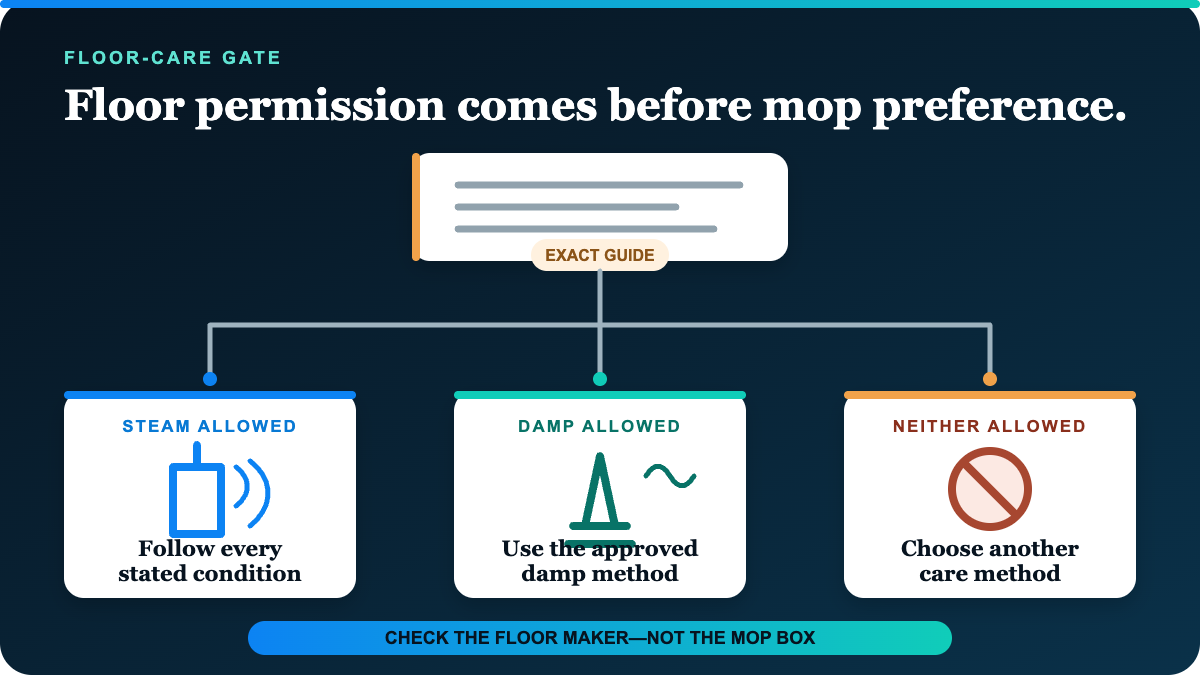
A steam mop can heat a damp pad quickly; a spin mop lets you wring a reusable head and use the permitted water or solution. The better choice begins with the exact floor product, finish and warranty—not a broad label such as wood-look, waterproof or sealed.
| What the floor maker says | Practical path | What to confirm |
|---|---|---|
| Steam is allowed under stated conditions | Steam mop can stay on the list | Heat setting, pad coverage, motion and drying instructions |
| Damp mopping is allowed but steam is not | Spin mop or another approved damp tool | Wringing, approved cleaner and standing-water limits |
| Steam and wet mopping are prohibited | Skip both | Approved spray, cloth or dry-cleaning method |
| The floor identity is unknown | Pause the purchase | Brand, collection, installation record and care guide |
The restriction is real and product-specific. Shaw says not to use steam on its hardwood or laminate floors. The National Wood Flooring Association's 2025 guidance also says not to use steam cleaners on wood floors. By contrast, Floor & Decor currently lists steam mopping as compatible for named NuCore Performance products. That disagreement is why “sealed floor” on a mop box cannot authorize use across a whole home.
Steam example: BISSELL PowerFresh 1940A
BISSELL lists the US PowerFresh 1940A as a 1,500-watt corded steam mop for sealed hard floors, with a 23-foot cord, 16-ounce tank, three steam settings and a 30-second ready time. Those specifications explain its working route; they do not override a floor warranty.
Its controlled-lab sanitizing claim depends on using the machine as directed. Do not compare that percentage with a mop maker's removal claim as if they measured the same outcome. The first buying check remains surface permission, followed by the cord route, pad care and where the hot machine can cool safely.
Spin example: O-Cedar RinseClean
O-Cedar's current RinseClean system separates clean and dirty water, uses a foot pedal to control wringing and includes a machine-washable microfiber head. The telescoping handle extends to 51 inches. The maker lists it for common sealed hard floors and says the bucket and head need rinsing and drying after use.
The useful benefit is direct moisture control without a powered heater. The catch is the full bucket routine: fill, carry, wring, empty, rinse and dry. An adjustable wringer can reduce water in the head, but it still does not turn a prohibited wet-mop method into an approved one.
Do one room-by-room permission check
Look up the exact floor collection rather than relying on appearance. Record whether steam is allowed, whether damp mopping is allowed, which cleaners are approved and whether standing water or heat affects coverage. Mixed flooring may require two methods or a simpler cloth-and-spray routine.
If the regular mess also includes dry debris, compare a floor washer with a carpet cleaner separately. A steam or spin mop does not automatically vacuum first, clean upholstery or extract a carpet spot.
Buy only after the surface gives permission
Choose steam when the exact floor permits it and the powered routine solves the repeated job. Choose a spin mop when an approved damp method, moisture control and washable head fit better. Skip both until the floor identity is known when its care rules could change the purchase.