
Start with the moment the dirt leaves the vacuum
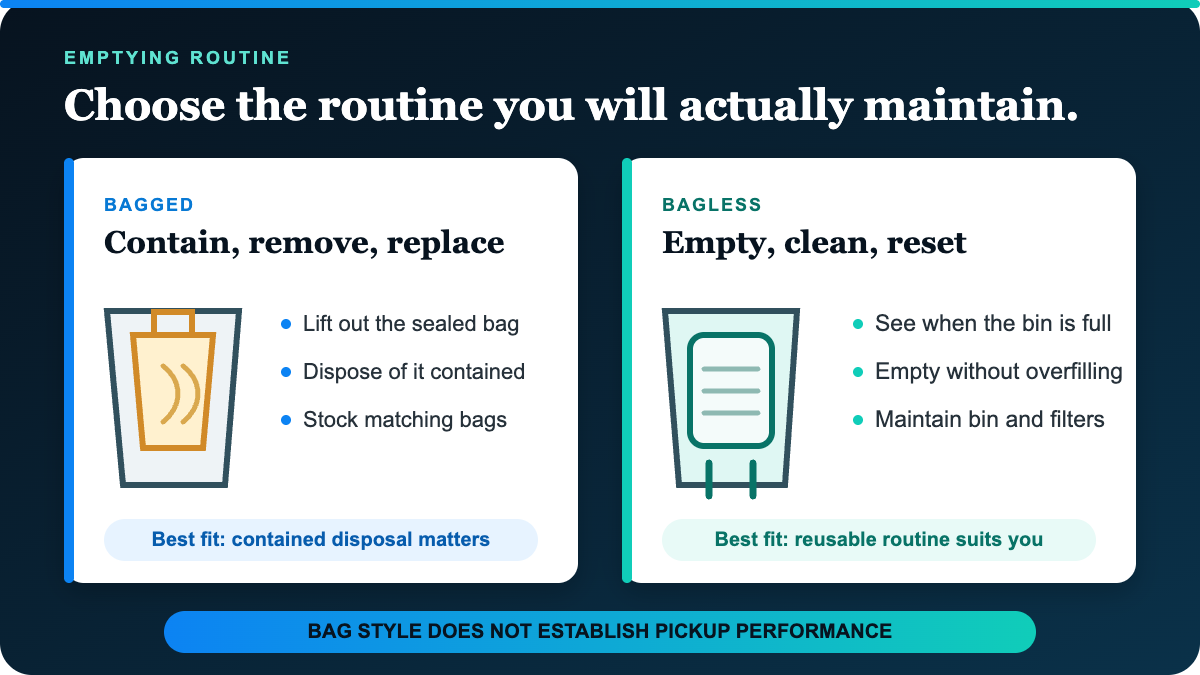
If emptying a dusty bin is the part you dislike, a bagged vacuum gives the mess a more contained exit. If buying and storing model-specific bags would make the cleaner harder to keep ready, a bagless model keeps that consumable out of the routine. Neither choice removes filter care or the need for the right floor tool.
| Your priority | Useful starting path | Check before buying |
|---|---|---|
| Keep collected dust contained during disposal | Bagged | Bag closure, compatible replacement bags and included exhaust filter |
| Avoid replacement bags | Bagless | Bin-emptying method, washable versus replaceable filters and drying time |
| Clean carpet, hard floor or pet hair well | Either | Exact floorhead, brush control and supported surfaces |
| Empty less often | Compare capacities | Maker-listed bag or bin volume and the fill indicator |
RTINGS' current comparison found that floorhead design, rather than the bag itself, drove pickup differences in its tested vacuums. Its air-quality work favored bagged disposal, while also showing that a bagless machine with effective post-motor filtration can control emissions during operation. The practical split is the whole dirt path: intake, seals, filters and emptying.
A current bagged example: Miele Guard L1 Cat & Dog
Miele lists the US Guard L1 Cat & Dog, model 12704570, with a 3.5-liter HyClean Pure TU bag, a bag-change indicator and an Active AirClean exhaust filter. The bag locks into its ComfortFit system, and a matching four-bag pack is an ongoing supply item.
That setup suits a buyer who would rather remove one closed container than tip loose debris from a bin. The catch is compatibility and recurring supply: the exact TU bag must remain available, and this model's listed Active AirClean filter should not be described as the optional HEPA AirClean accessory.
A current bagless example: Miele Boost CX1 Cat & Dog
The US Boost CX1 Cat & Dog, model 11735550, uses a 1-liter dust container and lists a HEPA AirClean exhaust filter. It avoids disposable collection bags, but the smaller listed container makes emptying part of the normal routine.
Bagless is the cleaner fit when you accept that hands-on step and will follow the manual for the bin and filters. Empty the container where released dust is manageable, let washable parts dry fully when the instructions require it, and keep replacements on the actual model's schedule.
Compare the complete cleaner, not two containers
The two Miele examples are useful identity anchors, not a head-to-head performance test. They differ in body size, capacity and supplied tools. A sealed bag does not rescue the wrong floorhead, and a HEPA label does not tell you how cleanly a bin empties.
Before ordering, write down the surfaces you clean, the attachment used most often, where the vacuum is stored and where you will dispose of debris. Then confirm the exact bag or filter part numbers and current replacement path. A household sensitive to airborne dust should treat this as practical exposure control, not a medical result.
Choose the maintenance you will actually finish
Choose bagged when contained disposal and a larger listed collection volume make the recurring job easier. Choose bagless when removing bag purchases matters more and bin care fits the routine. Then select the floorhead, filtration and reach for the home itself.
If the larger question is automation versus reach, compare a robot vacuum with a cordless stick. Bag style answers disposal; it does not decide whether the cleaner can reach stairs, furniture or a repeat floor route.