
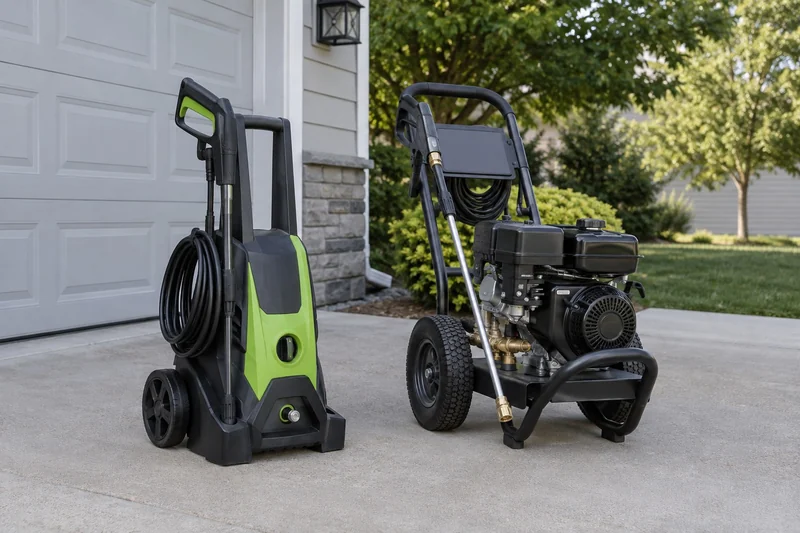
Read water flow beside the pressure number
A corded electric pressure washer is worth considering for occasional suitable jobs around a home with a practical power connection. A gas model becomes more attractive for larger outdoor work when its extra rated flow is useful and engine upkeep is acceptable.
The number to read beside PSI is GPM: rated gallons per minute. Two machines with similar pressure can move very different amounts of water. Use that difference to compare water delivery; cleaning time also depends on your patio, the dirt and how you work.
What these two full-size examples change
| Manufacturer-rated example | Pressure | Flow | Power source |
|---|---|---|---|
| RYOBI RY143011 | 3,000 PSI | 1.1 GPM | Corded electric |
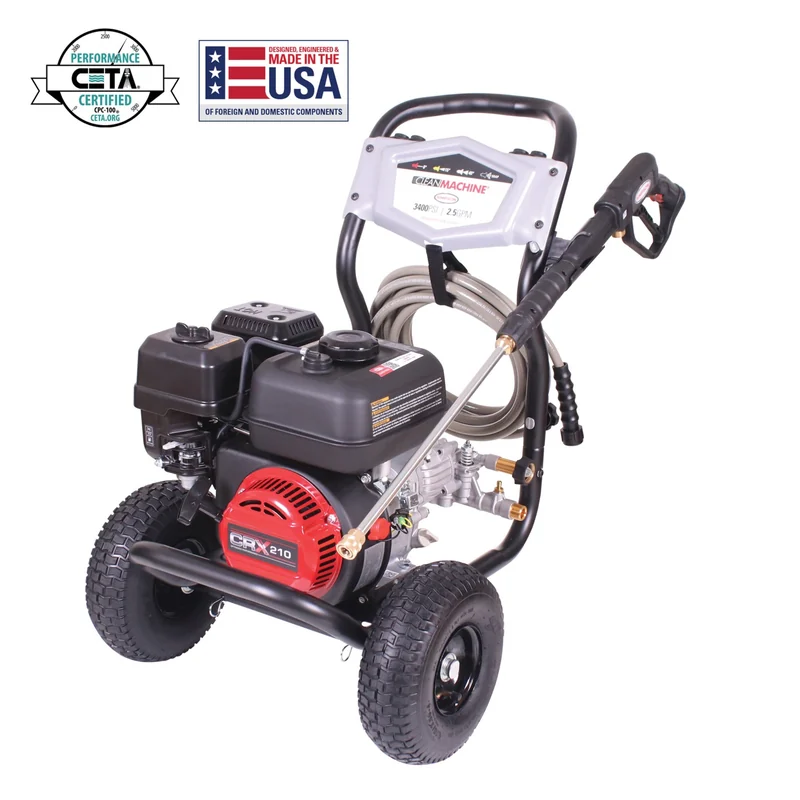
| SIMPSON CM61083 | 3,400 PSI | 2.5 GPM | Gas engine |
Sources: RYOBI's product page and SIMPSON's model page. These are manufacturer ratings, not Digital Derek cleaning tests.
The gas example's flow is more than twice the electric example's rated flow, while the pressure difference is much smaller. That is a useful distinction to investigate for larger rinsing and cleaning jobs. It does not mean “twice as fast”: surface, nozzle, technique and supply water also affect the result.
Electric for a manageable home routine
The RYOBI RY143011 offers a brushless electric route. It removes fuel and engine servicing from the ownership routine. For a homeowner doing occasional compatible surfaces near an appropriate outlet, that can be a useful trade.
The catch: plan the power and water routes together. Follow the model's electrical and storage instructions rather than assuming any extension cord or accessory will work. The pump and hose still need care even though there is no gas engine to maintain.
Gas when more flow serves the job
The SIMPSON Clean Machine CM61083 is worth considering for larger suitable outdoor areas where the rated flow matters. Check the water supply and any surface-cleaner attachment against the machine's requirements, not just the connector shape.
The catch: fuel, engine care and safe outdoor operation come with it. This specific model is not sold for California. Follow the manufacturer's owner manual, including its carbon-monoxide precautions; a gas engine must not be operated in a garage or other enclosed space.
We have not established a measured cleaning-speed or durability winner between these two models. The comparison is about documented capacity and the ownership routine, not a universal recommendation to buy the larger machine.
Keep light rinsing in a different category
For garden items, bikes or small outdoor rinses where the surface permits it, a much smaller tool may be enough. Our cordless pressure washer versus garden hose comparison covers that lighter decision. Do not expect a battery-powered portable cleaner to substitute automatically for these full-size examples.
Choose the complete setup
Price the machine, suitable hose reach, required nozzles or attachments, and storage care for your climate. Match the technique and nozzle to the surface instructions before starting; higher pressure is not automatically the better setting for a delicate finish.
Choose electric when the power route and occasional workload fit. Choose gas when a larger suitable job makes the extra flow and ownership work worthwhile. Buy the capability you will repeatedly use, with the accessories that actually match it.
If the machine still works for your jobs and only its hose is damaged, match a replacement hose at both ends before replacing the entire washer.