
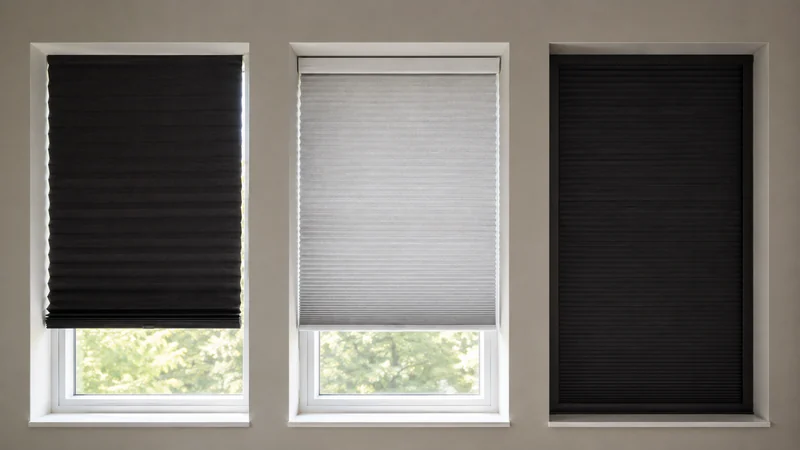
Start with the window failure, not the word “blackout”
A no-drill shade can fail before its fabric is evaluated. The headrail may not fit the recess, the opening may narrow, a lock may occupy the mounting plane, the adhesive may not suit the finish, or the shade may leave a bright perimeter around an otherwise dark center.
Use the measurement guide first. Then choose among three different jobs. The current evidence supports two exact Amazon research options and one non-Amazon perimeter-control benchmark:
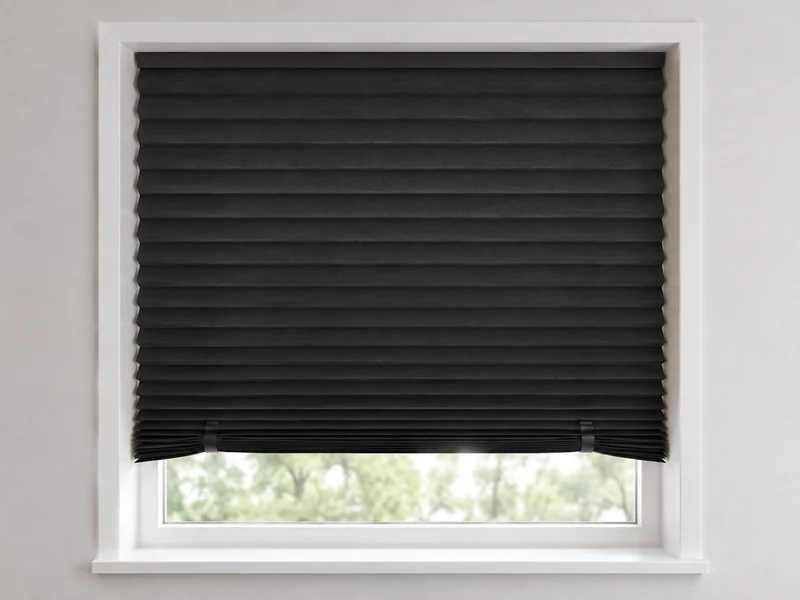
- Redi Shade Original Blackout Pleated Paper Shade : temporary trim-and-stick coverage for a compatible flat surface.
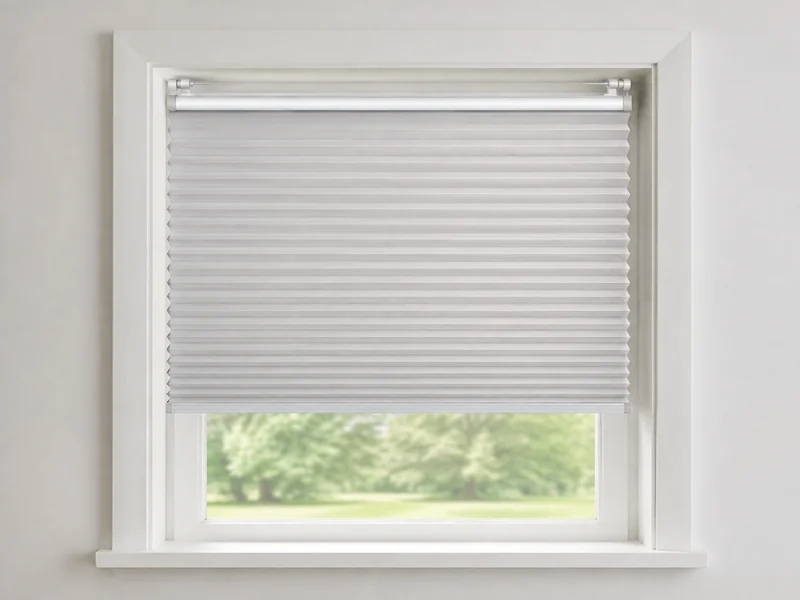
- LazBlinds No Drill Cordless Cellular Shade : reusable pressure-fit cellular shade for a compatible inside recess.
- SelectBlinds Click2Fit Cordless Total Blackout Cellular Shade: deeper tracked benchmark for a compatible square opening; no affiliate link is used.
Match the format to the real installation job
This is a routing table, not a first-to-third ranking.
Temporary option: Redi Shade Original Blackout Paper Shade
Redi Shade documents the product family's trim, peel, and stick installation, cordless clips, paper construction, and inside- or outside-opening placement. The exact Amazon research identity retained here is model 1617201, ASIN `B000SDROMG`.
Its advantage is low mechanical commitment: no pressure headrail, side track, or bracket must fit the recess. That does not make the installation consequence free. The adhesive still meets a finished surface, the paper must be cut straight, and normal lifting depends on clips rather than a spring mechanism. An opening wider than one shade may require overlap, which creates another seam to inspect.
This format suits a temporary setup. Check the adhesive's surface and removal instructions, and consider how often you will fold the paper shade each day. Long-term adhesion and finish compatibility depend on the window and conditions.
Reusable pressure-fit option: LazBlinds Cordless Cellular Shade
The Spruce links the exact LazBlinds ASIN and reports a six-month in-home test. Its tester found the tool-free pressure installation quick and stable, but also observed noticeable side gaps. The article lists the model as an inside-mount cellular shade and reports a minimum recess depth around 1.2 inches for the tested configuration.
That combination defines the role: reusable and mechanically mounted without drilling, with the side-light tradeoff retained. The pressure rail must fit the actual top width, while the shade body still needs a clear path past narrower trim, locks, and the sill.
The exact ASIN is a size-and-color variant, not a universal fit. Do not copy its listed dimensions into another window. Use the exact live variation and manufacturer instructions after recording the window map.
Perimeter-control benchmark: SelectBlinds Click2Fit Total Blackout
The current SelectBlinds product page and installation guide show a more involved no-drill system: pressure-fit headrail, side tracks, bottom rail, top light blockers, and optional sealing strips.
Those parts address a different failure than a basic shade. They control the perimeter, not just light through the material. The tradeoff is fit eligibility. The current product requires a minimum 2 5/8-inch inside-mount depth, expects a sufficiently square opening, and excludes PVC frames. A renter may also need permission for any surface-contact component even when no screw is used.
This product is included as a control because it shows what additional edge control requires. It is not monetized here and is not automatically better for a shallow, irregular, or incompatible window.
Use a temporary darkness test before choosing the format
Hold an opaque panel over the proposed coverage area without attaching it to the finished frame. Observe the same room at the same time of day with the panel centered, then with extra overlap at each side and above the opening.
- If the center still glows, the material is not opaque enough for the job.
- If only the sides brighten, coverage or tracks matter more than another dark fabric claim.
- If the top or bottom remains bright, inspect headrail and sill geometry.
- If darkness improves but the window cannot open or the lock is blocked, the layout failed.
The test does not predict exact-product attachment, durability, or long-term operation. It does reveal whether the real purchase problem is fabric, coverage, or perimeter control.
Why current recommendations disagree
The Spruce compares installed shades through household use and keeps the exact LazBlinds side-gap limitation. Redi Shade describes a temporary adhesive paper format with minimal hardware. SelectBlinds engineers around perimeter leakage with more components and stricter fit requirements.
Those methods answer different questions. A responsible comparison cannot turn them into one universal winner. It can route the reader by commitment, attachment, recess geometry, edge-light tolerance, and daily operation.
Choose the installation you can live with
Choose Redi Shade when the job is temporary trim-and-stick coverage and the surface can accept it. Choose the LazBlinds cellular shade when a reusable pressure-fit mechanism and ordinary side-gap tradeoff fit the window. Use a tracked system as the reference point when perimeter darkness matters enough to justify deeper, squarer, and more restrictive fit rules.
If a shade is already installed and the room still looks bright, use the light-gap diagnostic before replacing the material.