
Choose the job before the cube
Packing cubes keep clothing groups easy to find. Compression cubes add a second zipper to squeeze bulky, soft items into less space. Start with the improvement you want: quicker unpacking, a tidier suitcase or room for the rest of your kit.
The publisher pages checked on August 30, 2026 also split by job. Travel + Leisure selected Aerotrunk overall and Bagsmart for compression. The Guardian selected Eagle Creek overall and Thule for compression. Pack Hacker recommends several compression options instead of forcing one universal winner.
Check your bag’s fit
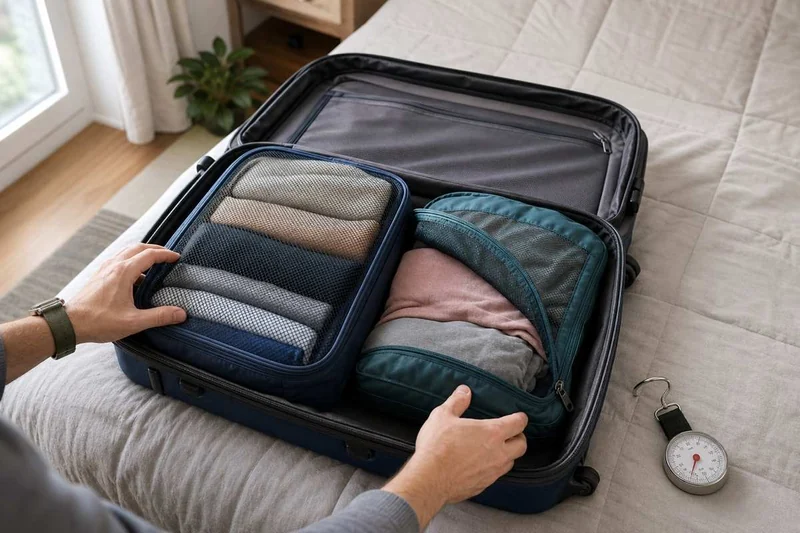
Pack the clothes you expect to bring using pouches or zippered bags you already own. Put them in the actual carry-on, close it without forcing the zipper, and weigh the finished bag.
That quick check shows where a cube could help. Measure around wheel housings, handle channels and shoes so the cube fits the space you can actually use.
If wrinkles are already the problem, use the folding and layering checks in How to Pack Clothes With Fewer Wrinkles before adding compression.
Compare the shapes inside your suitcase
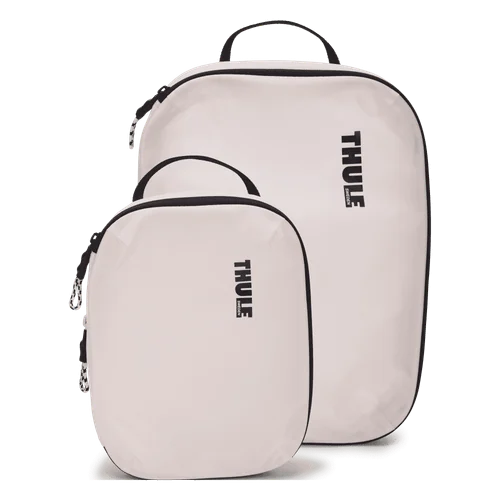
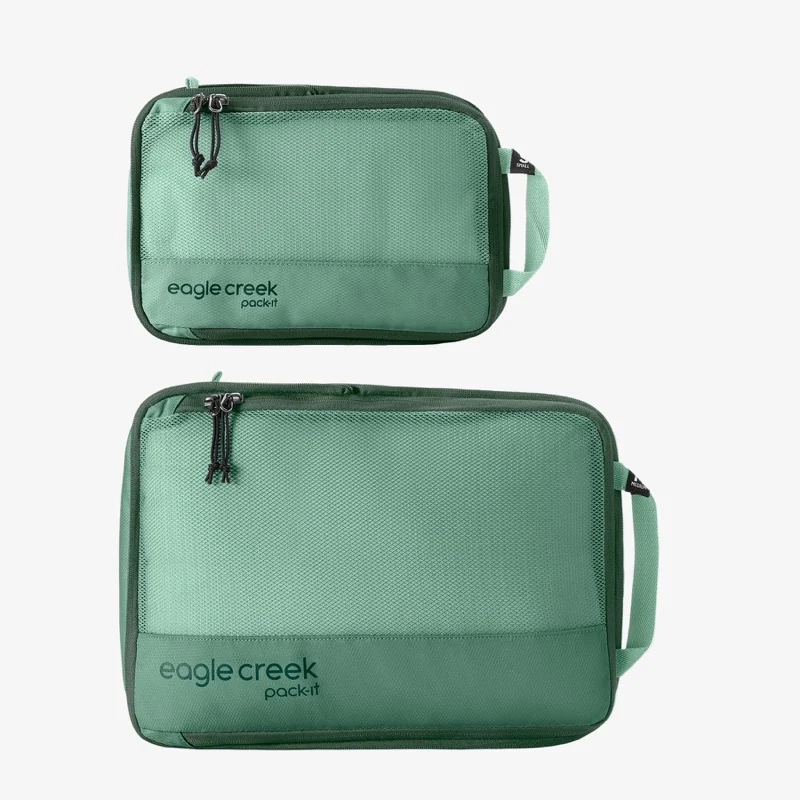
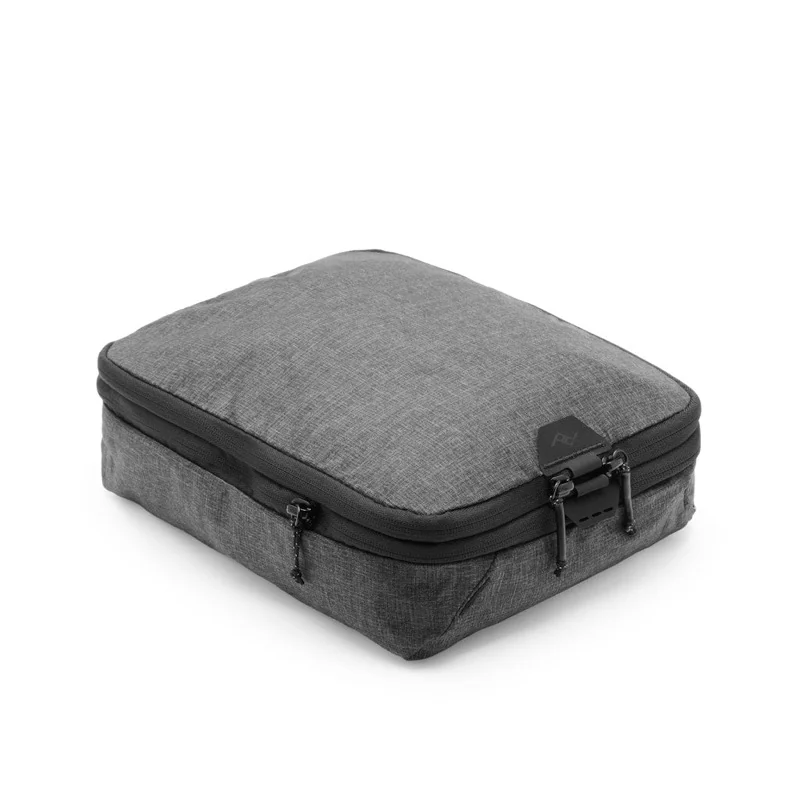
Thule and the Eagle Creek Willow Green set each give you two cubes for separate clothing groups. Eagle Creek's mesh panels make the contents easy to spot. Peak Design's Smedium is one cube with an adjustable clean/worn divider; check how many you need before comparing the total cost.
| Exact option | Measurement condition | Dimensions |
|---|---|---|
| Thule small | Expanded | 10.2 × 7.1 × 4.3 in |
| Thule medium | Expanded | 14 × 10 × 5.9 in |
| Eagle Creek small | Standard | 10 × 7 × 3 in |
| Eagle Creek medium | Standard | 14 × 10 × 3 in |
| Peak Design Smedium | Expanded | 30 × 22.5 × 17 cm (about 11.8 × 8.9 × 6.7 in) |
These are manufacturer exterior measurements under different expanded or standard conditions, not a common loaded test. Clothing can make a cube bulge. Lay out the footprints around shoes and toiletries, then check that the packed suitcase closes comfortably.
The table follows Thule's White-set specifications, Eagle Creek's Willow Green S/M specifications and the Peak Design manufacturer page linked above. The photos identify those products. Thule's exact retail identity was checked August 31; the Eagle Creek and Peak Design manufacturer details were checked September 15, 2026. Use Peak Design’s product page to check the Smedium size and current buying options.
For a gift, match the recipient's usual bag and routine. A useful divider may add more than another large set when they already keep everything organized. The travel gift guide covers the rest of the setup.
What the stronger tests show
Fit beats piece count
In the methods checked on August 30, Travel + Leisure reported testing 48 cubes over at least six months. The Guardian tested 26 cubes across 14 trips using backpacks, carry-on luggage, and checked bags. Both methods put real bag fit ahead of the number of pieces in a set.
Measure the usable interior of your bag and compare it with the loaded cube dimensions. Choose sizes that work with your normal layout.
Use compression for bulky clothes
The Guardian checked both volume reduction and wrinkles. Pack Hacker also considered creasing and stacking. Compression is most useful when soft clothing takes up room you need elsewhere; give wrinkle-prone outfits a gentler fold and enough space.
Choose a load that lets the compression zipper close smoothly and keeps the cube easy to stack.
Why the roundups disagree
The publishers used different product pools, bags, trip patterns, and scoring systems. Travel + Leisure chose Bagsmart for compression; The Guardian chose Thule. Their overall winners were standard cubes from different brands.
For a small-and-medium compression set, the Thule Compression Cube Set remains an option from that research. Travel + Leisure also selected a BAGSMART compression set. Match the exact model and size before choosing a listing.
For organization without compression, Aerotrunk and Eagle Creek remain publisher selections—not a Digital Derek preference.
Make the final fit check
Choose the cube that fits your usual clothing groups and suitcase layout. If your existing pouches already make packing easy, keep using them; add a feature when it improves a specific part of the trip.
Frequently asked questions
Do compression packing cubes reduce luggage weight?
No. They change how much space compressible clothing occupies. The clothing and cube still weigh the same, so weigh the finished bag.
Do packing cubes prevent wrinkles?
They can keep a folded bundle from shifting, but tight compression can also set creases. Fabric, folding method, pressure, and packed time all matter.
Are compression packing cubes worth it?
They can help when bulky, soft clothes crowd the suitcase. Compare the packed result with your existing pouches to see whether the extra space is useful on your trips.