
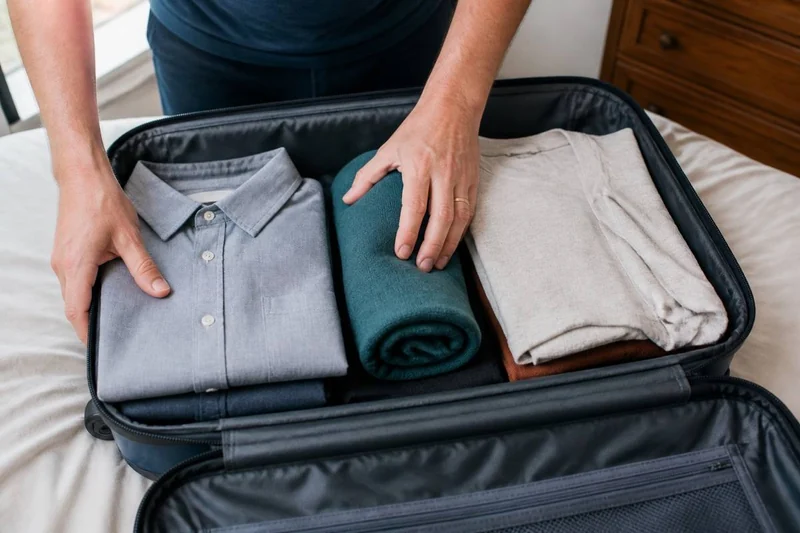
Pack for the clothes you are taking
To pack clothes with fewer wrinkles, match the method to the garment, use as few sharp folds as practical and avoid crushing delicate pieces. Rolling can suit casual knits; carefully folding or layering can suit structured or delicate garments. Leave enough room to close the bag comfortably, then unpack clothes promptly when you arrive.
These are starting points from published guidance, not a promise of wrinkle-free clothes. We have not run a controlled fold-versus-roll test, and the sources below differ on which method suits particular fabrics.
Choose between rolling, folding and layering
| What you are packing | A useful starting method | What to check |
|---|---|---|
| Casual knits and other flexible clothing | Try a loose roll | Smooth the garment first and check whether the roll creates creases |
| Tailored or delicate garments | Use a few careful folds and place them toward the top | Keep heavier items from pressing into them; follow the garment's care instructions |
| Pants or dresses suited to layering | Consider a knee-fold layering method | Check where the fold lands and whether the garment fits the bag without extra creases |
| An unfamiliar fabric or construction | Rehearse with that garment in your own bag | Compare the result after a similar packed interval before relying on it for an important outfit |
University of Kentucky Cooperative Extension distinguishes casual knits from delicate or tailored clothing and advises unpacking promptly. REI's travel-clothing guidance describes a knee-fold layering approach for some pants and dresses. Those recommendations help you choose a starting method; they do not establish one winner for every suitcase.
A simple packing routine
- Check the clothes. Look at the fabric, construction and care label. Notice the areas that usually crease, such as sleeves, trouser knees or a shirt's front.
- Choose a method for each type. Use the table above instead of rolling every garment by default. Smooth the piece before making the folds it needs to fit.
- Plan the load. Keep delicate or tailored pieces toward the top and avoid forcing a bulky load around them. The bag's shape and surrounding items affect pressure.
- Check the closed bag. If closing it requires crushing the contents, reduce or rearrange the load. A compression zip changes packing pressure; it does not prove wrinkle prevention.
- Unpack promptly. Check the garments you need first and follow their care instructions if further attention is needed.
For the bag itself, compare hardside and softside carry-ons. One deep compartment and two shallower halves give you different spaces to arrange the same clothes.
Does rolling clothes prevent wrinkles?
Rolling is an option, not a guarantee. Travel + Leisure's rolling guide recommends a particular retained-end technique. Pack Hacker's packing guidance notes that rolling can save space but may add wrinkles and treats delicate fabrics differently.
For a garment you care about, try the method before the trip. Use the same garment and similar bag, load and packed time when comparing methods. This can tell you what works for your routine without turning one result into a rule for every fabric.
Do packing cubes keep clothes wrinkle-free?
Packing cubes organize clothing, but the sources used here do not establish that a cube or compression product prevents wrinkles. Start with the clothes and luggage you own. If keeping outfits separate would help, the packing-cube comparison explains sizes and layouts; choose one for organization rather than an unsupported wrinkle claim.
What should I do when I arrive?
Unpack promptly and check the care label before using heat, steam or another treatment. If a steamer would earn its space on your trip, compare the domestic and dual-voltage travel-steamer options against your destination and garment needs.
You can finish the rest of the bag with the guide to packing toiletries for air travel, then use the hotel toiletry setup to keep the sink usable.
What can change the result
Fabric, seams, garment construction, packed time, movement and luggage pressure can change how clothes look when unpacked. Wrinkle-resistant is not the same as wrinkle-free. The practical goal is fewer avoidable creases and a packing routine that suits your clothes.