
Decide whether the failure is volume, access, or weight
Pack the intended clothing, close the actual suitcase, and weigh it first. If it already closes and stays within the applicable limit, another compression system may add work without changing the trip. If it fails, identify whether the problem is soft-item volume, repeated access, or weight before comparing products.
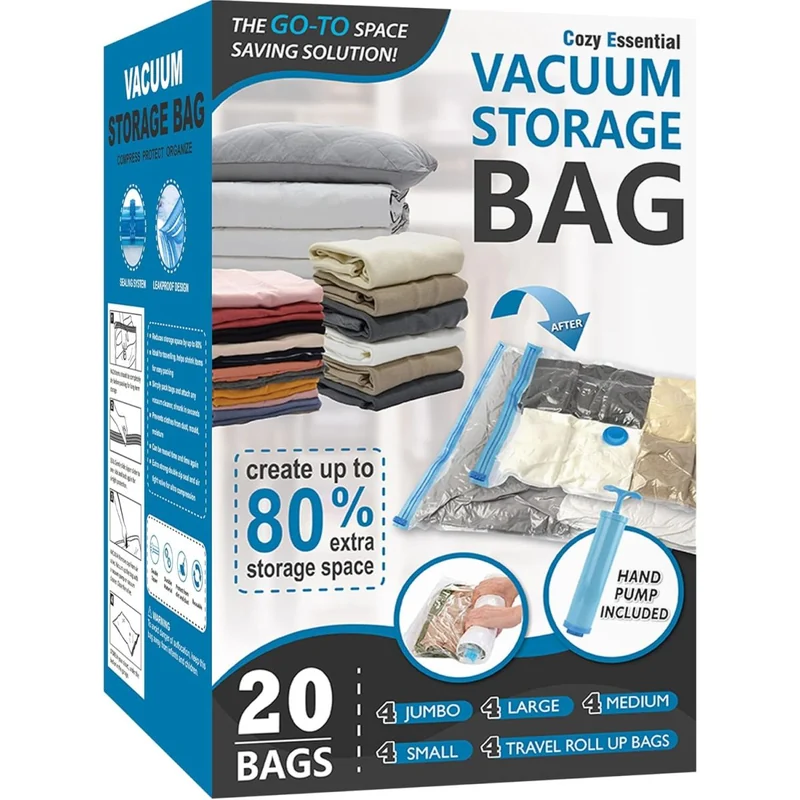
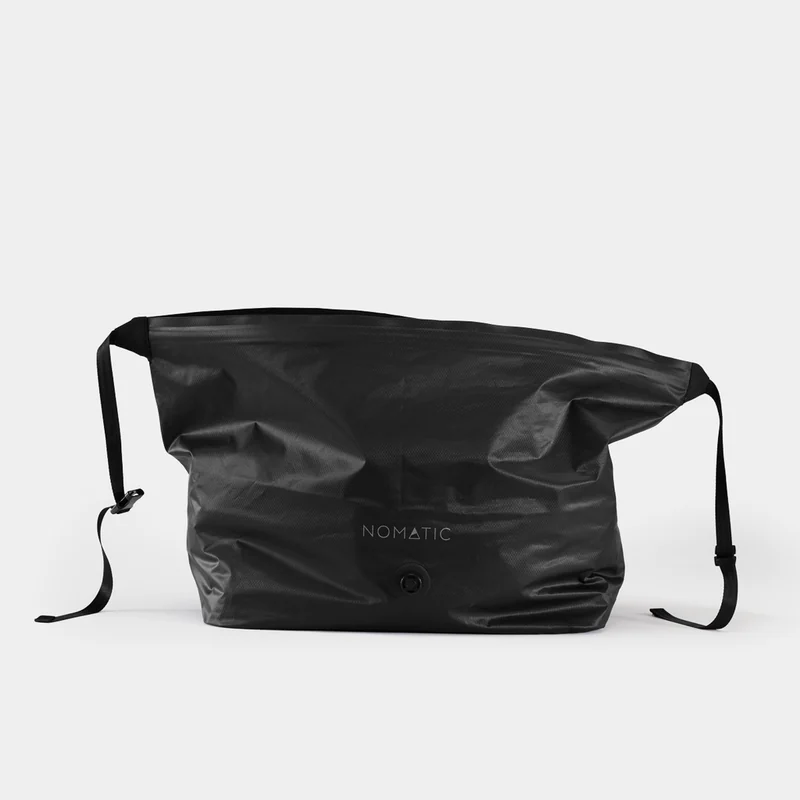
Product identity sources: Cozy Essential and NOMATIC. The photos identify the exact products; they do not prove compression, leakage, wrinkle control, durability, or current value.
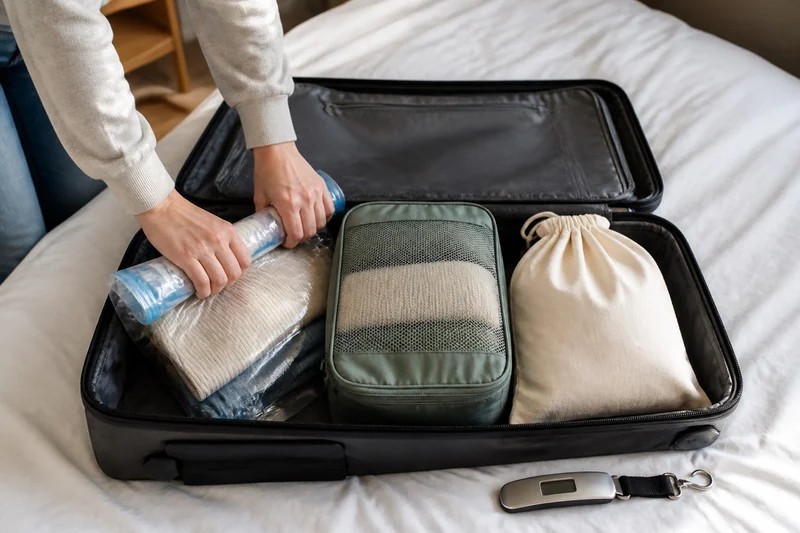
VACUUM OR ROLL BAG
Maximum soft-item volume?
Choose this option only when removing air solves the actual suitcase failure.
Tradeoff: seal, wrinkle, and recompression friction.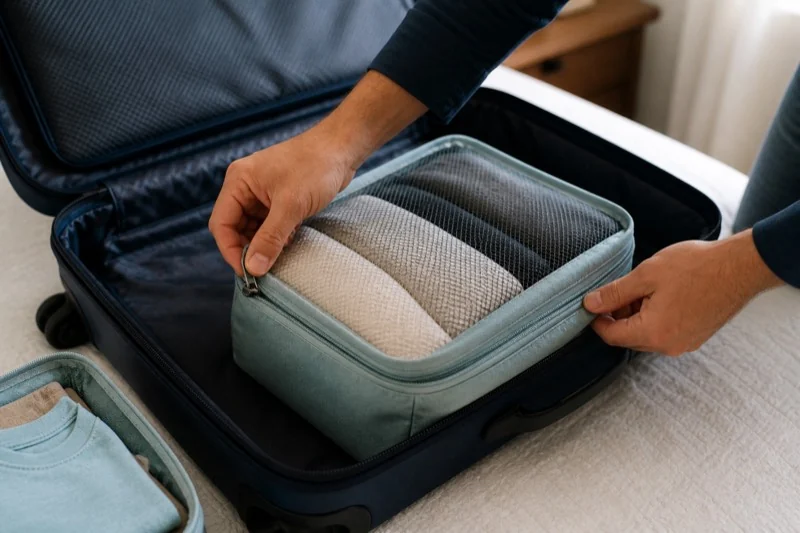
ZIP-COMPRESSION CUBE
Repeat access and organization?
Use a zipper format when reopening and resetting the load matter more than maximum compression.
Check: loaded cube dimensions in the real bag.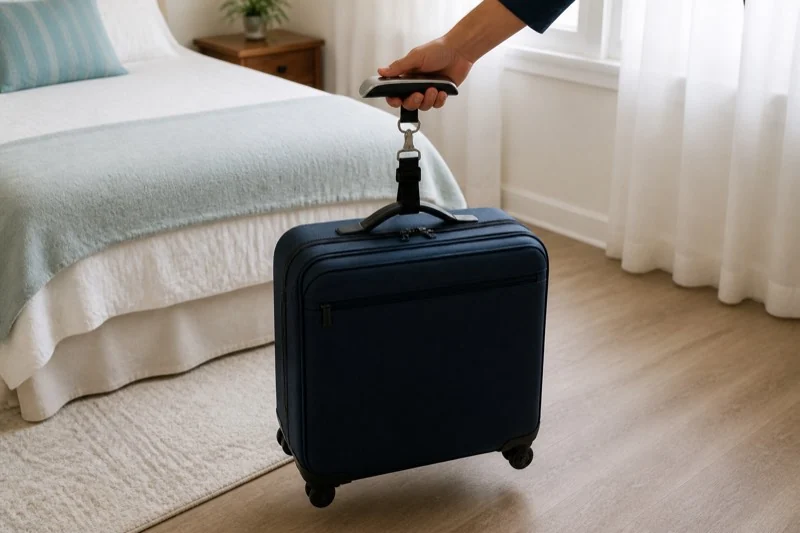
WEIGH FIRST
Is weight the actual limit?
Remove or replace items when the finished bag is too heavy.
Before-you-buy result: compression cannot reduce weight.The first row shows exact current vacuum-bag options; the lineup below keeps the wider method decision visible. The zip-compression option still has no verified exact winner on this page.
Choose by the friction you need to remove
| Your actual problem | Format worth considering | The tradeoff to accept | Skip it when |
|---|---|---|---|
| Bulky soft clothes overwhelm suitcase volume | Vacuum bag | Pump dependence, seal risk, more wrinkles, and slower access | Weight is already near the limit or you cannot recompress for the return trip |
| You need plastic compression without a pump | Hand-roll compression bag | Manual rolling, less predictable air removal, and material/seal wear | You expect frequent access or dislike repacking every stop |
| You want organized layers with moderate compression | Zip-compression packing cube | Extra zipper effort and less dramatic volume reduction | The cube's filled dimensions do not fit the actual suitcase zone |
| The bag closes and the weight is acceptable | Plain cube, pouch, or no product | Less visible “compression” | Compression adds complexity without changing the outcome |
If you are already choosing between standard and zip-compression cubes, use the packing-cube problem map. This page covers the wider vacuum-versus-roll-up-versus-zip decision so the two intents do not pretend to be the same product search.
What current tests can—and cannot—tell us
Travel + Leisure's current vacuum-bag test reports testing 18 bags and selecting six, with separate roles for a pump-based overall pick, a roll-up option, a USB-pump option, and a quick-compression option. It also distinguishes lighter, cheaper plastic from more durable but costlier nylon. That is useful within the vacuum-bag option.
Its current compression-packing-cube test covers a different option and different winners. A packing cube with a compression zipper is not a failed vacuum bag; it solves access and organization differently.
The important finding is not which name tops either article. It is that search results often merge functional substitutes that require different infrastructure and create different trip friction.
Current research shortlist
The Cozy Essential 20-Pack is the broad pump-assisted research lead because Travel + Leisure selected Cozy Essential overall within its current vacuum-bag test. The NOMATIC Vacuum Bag 2.0 is the pump-free premium alternative for travelers who would rather roll air out than carry or power a pump.
Those are separate decision roles, not first and second place in a Digital Derek test. Exact identity was checked on August 31, 2026. Current seller, price, stock, shipping, returns, and warranty remain offer-specific and are not deal claims.
The wrinkle and reuse tradeoff
More volume reduction usually means more pressure on folded clothing and more work to reopen, reorganize, and recompress. That does not make vacuum bags bad. It makes them better suited to bulky soft items and fewer access events.
Use these questions before comparing brands:
- Will the clothes stay compressed until arrival, or will you open the bag every day?
- Can you reproduce the same compression on the return trip?
- Does the accommodation provide the pump or power setup the system needs?
- Are wrinkles an acceptable tradeoff for the saved volume?
- Does the compressed shape still fit the suitcase's usable zone?
- Is weight—not volume—the actual reason the bag will not close or qualify?
Run the before-you-buy suitcase test
You can reject the premise before ordering anything:
- Pack the intended garments in a plain pouch or cube already owned.
- Put the pouch in its actual suitcase zone, not on an empty bed.
- Close the suitcase without sitting or forcing the zipper.
- Weigh the complete bag.
- Remove the pouch once, retrieve one garment, repack it, and close again.
If the suitcase closes, stays within the applicable carrier limit, and the access step is tolerable, a compression purchase may add no meaningful value. If volume is the only failure, then compare methods.
Make the final fit check
- Current seller, price, stock, shipping, warranty, return terms, valve replacement, and pump compatibility remain offer-specific or unavailable.
- Compression, leakage, zipper stress, wrinkles, reuse, and durability still require comparable testing.
- Publisher selections cannot prove which method fits your suitcase, clothing, itinerary, or carrier rules.
- A luggage scale reading and current carrier policy matter more than a generic claim about “saving space.”
Frequently asked questions
Are vacuum bags better than compression packing cubes?
Only when maximum soft-item volume reduction matters more than easy access, lower wrinkle pressure, and pump-free reuse. They solve different jobs.
Do compression bags reduce luggage weight?
No. They remove air and change the shape or volume of the packed load. The clothing still weighs the same, and the bag itself adds a little weight.
What is best for a multi-stop trip?
A zip-compression cube or plain cube may be easier to open and reset repeatedly. A vacuum bag can still make sense for bulky items that remain sealed until one destination.