
Choose the constraint before the product
Measure the available rod width, the drop to the first obstruction, and the thickest representative garments. Then decide how often the pants must be reached and returned. A closet that needs fast weekday access has a different job from a seasonal or low-frequency clothing zone.
Use the loaded pants-hanger fit guide before comparing products. Its before-you-buy mockup can reject a format that collides with a shelf, shoe zone, drawer, or floor storage.
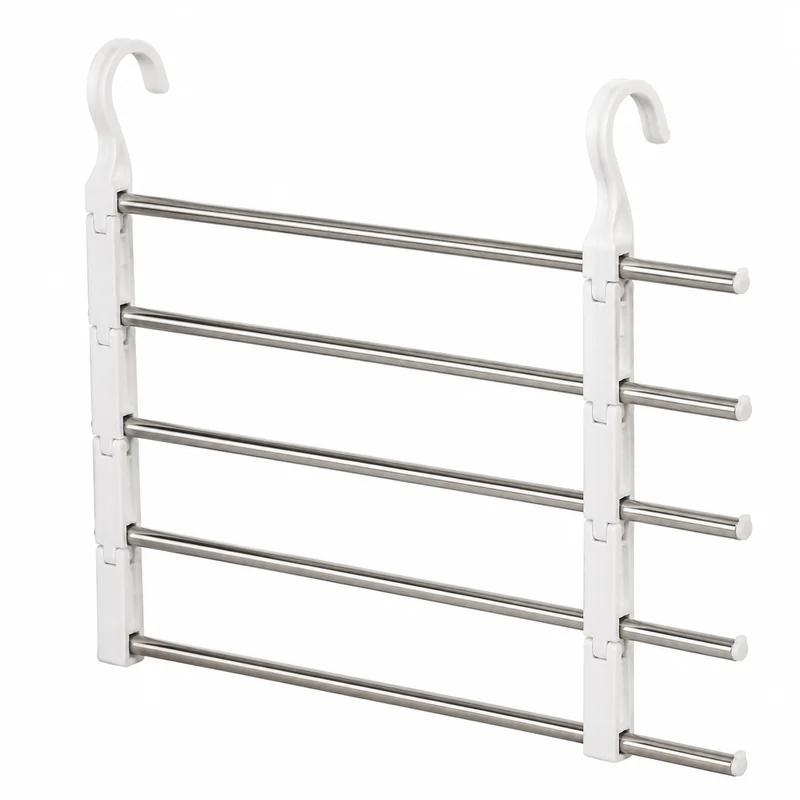
Why Kalimdor is the density option
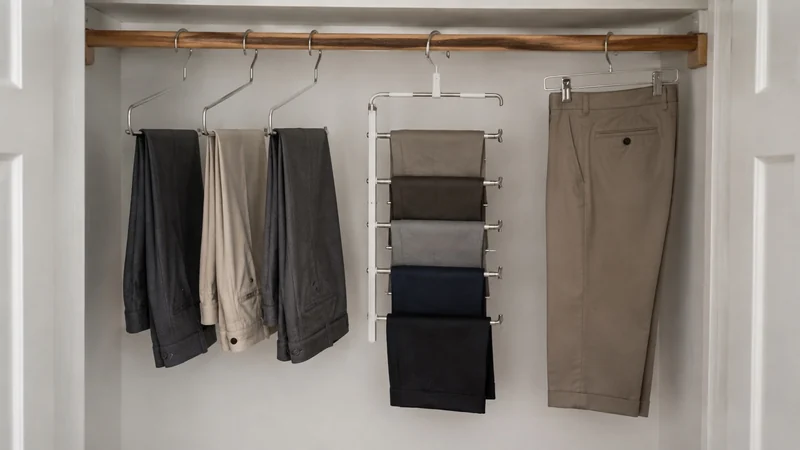
Apartment Therapy links the exact Amazon record and reports more than a year of editor use. The format can hang horizontally while pants are loaded and then collapse into a vertical arrangement. That makes its role clear: exchange rod width for vertical stacking.
This is one editor's experience with the format. For your closet, measure the hanging drop with your own pants and try removing a middle pair. Those two checks tell you more about everyday fit than a general space-saving claim.
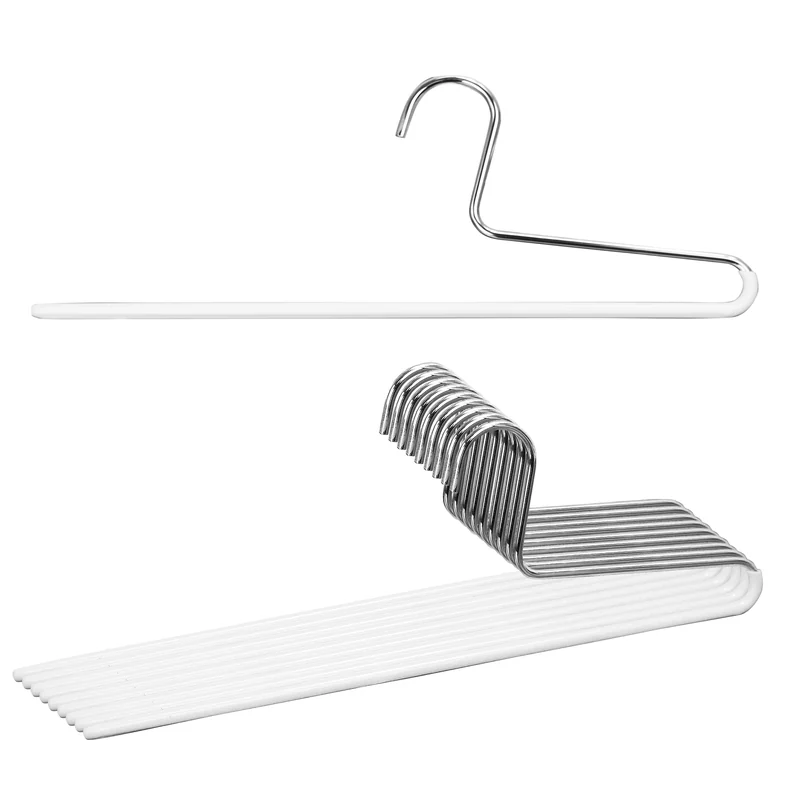
Why MAWA KH1 is the access option
Wirecutter reports testing ten pant hangers with pants across multiple weights and fabrics. It says the MAWA KH1 came out on top in that pant-hanger panel, citing balanced, compact behavior and a coating that gripped without the sticking reported with other rubber-coated models.
MAWA establishes the current single-rod KH1 format and its compact published dimensions. That evidence supports the role, not a promise that the coating, hook, balance, or garment fit will behave the same in every closet.
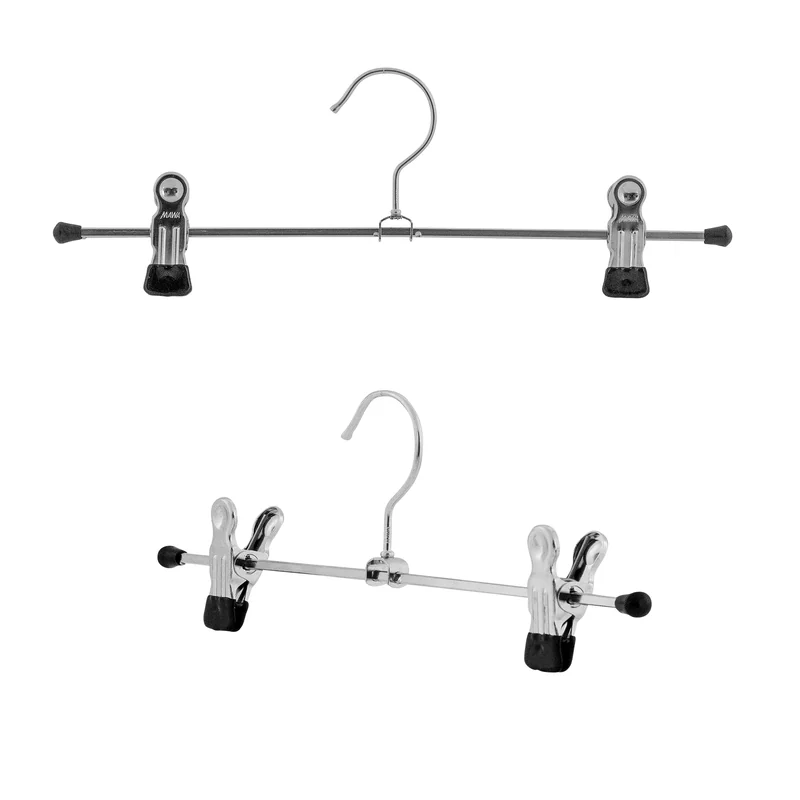
Why MAWA K30D is the clip option
Wirecutter treats clip hangers as a separate garment job and identifies the K30D as the strongest result among the skirt hangers in its panel. Welcome Objects separately reports a three-day-per-garment comparison across polyester crepe, denim, and wool. It found the MAWA clips gentler and more secure than the tested alternatives, while also flagging a small hook that barely fit its 1⅜-inch wooden rod and was difficult to move.
MAWA maintains the current K30D adjustable-clip identity and dimensions. None of those sources proves mark-free performance on every fabric or fit on every rod.
Check the loaded fit
- Assign the option one job: density, single-pair access, or waistband clips.
- Mock the loaded footprint with the actual thickest pants.
- Check the lowest garment against shelves, shoes, drawers, and floor storage.
- Check rod diameter, available hook clearance, and side-to-side movement.
- Remove and return the middle or most difficult pair ten times.
- Reject the format if it creates a new blocked zone or a return routine you will not maintain.
This gate cannot prove long-term coating life, clip marks, grip, balance, or hardware durability. Those remain hands-on questions.
Balance closet capacity with everyday access
Choose Kalimdor when rod width is the bottleneck and vertical drop is available. Choose MAWA KH1 when independent access matters more than maximum density. Choose MAWA K30D when a compatible waistband should hang from adjustable clips. If the loaded mockup fails, keep the current hangers and fix the closet zone first.
For the full closet, start with organizing by access frequency and keep daily clothing in the easiest retrieval-and-return zone.