
The short answer
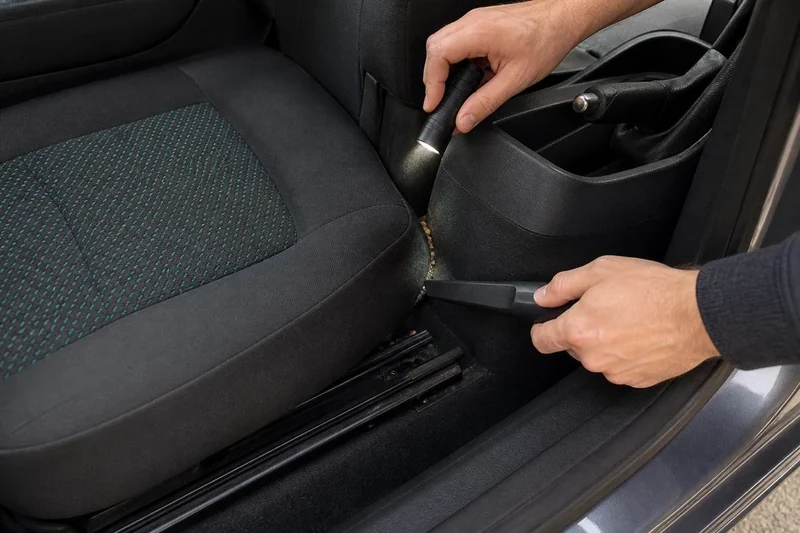
The problem may be access rather than suction. Inspect the visible route to the debris, compare it with the nozzle you already own, and keep the first attempt dry. The exact vehicle owner's manual controls seat movement, cleaning products, and any area containing sensors, wiring, controls, or safety systems.
Start parked, powered off, and dry
Work only while parked in a safe, well-lit location. Power the vehicle off and remove loose objects that can be lifted without reaching into moving mechanisms. Do not film while driving or allow a cleaning setup to obstruct pedals, controls, seat movement, or a safe entry path.
BISSELL's car-seat guidance says to remove loose debris before wet cleaning. It also recommends testing a cleaner on a hidden area and matching the method to the material. That is manufacturer guidance in a commercial context, not permission to use one formula or wet method on every vehicle.
Diagnose the access problem
Use a flashlight and inspect from the front and rear without pushing a tool blindly. Separate the job into:
- loose objects that are safely reachable;
- dry crumbs or grit on open carpet;
- debris beside the console;
- material near seat rails or controls;
- a spill or stain that may require material-specific care.
Stop when the route crosses wiring, connectors, sensors, moving rails, sharp edges, or an area the owner manual does not explain.
Make a reach template
Cut cardboard to the width and length of the existing crevice nozzle. Hold it against the visible opening without inserting it into rails or mechanisms. Mark where the nozzle body or hose would collide with the seat or console.
This checks geometry only. It cannot prove pickup, airflow, surface safety, or the ability to clean around a curve. The template is useful when it shows that a normal nozzle cannot physically approach the debris path.
Use the least aggressive dry method first
Dyson's current car-interior guide describes using a crevice tool beside, beneath, and along seat rails. If the exact vehicle manual permits the seat movement and the route is clear, move the seat only through its normal controls and use light, visible passes. Never force a nozzle into a narrower gap.
Do not remove or unbolt a seat for this consumer workflow. Do not disconnect wiring or introduce liquid into an unseen gap. A stain requires exact surface guidance, a hidden-area check, controlled moisture, and complete drying.
What a later tool comparison should record
An exact comparison should document nozzle width and length, the debris and surface, visible reach, pickup, maneuverability, cleanup time, emptying, noise, and every area left untouched. More suction is not a win when the nozzle cannot reach safely.
If a vacuum can reach the visible route, compare the current cordless car-vacuum research options by mess type, nozzle access, cleanup, and power source before buying another tool.
What you still need to check
- Your vehicle manual controls safe seat movement and which cleaners can touch each surface.
- A tool that reaches one vehicle's gap may not fit another or safely clear its rails, wiring, controls, and sensors.
- Check pickup and surface care in a visible area first. Start dry and stop if the route is hidden or the tool must be forced.
Bottom line
Measure the access route before buying more power. Start dry, keep the vehicle parked, follow the exact manual, and stop before wiring, controls, rails, or an uncertain surface.
If the cleaning problem is solved and you want to prevent the next drop, use the fit-first car seat gap filler comparison. It separates soft blockers from storage organizers and keeps exact vehicle fit as the deciding gate.