
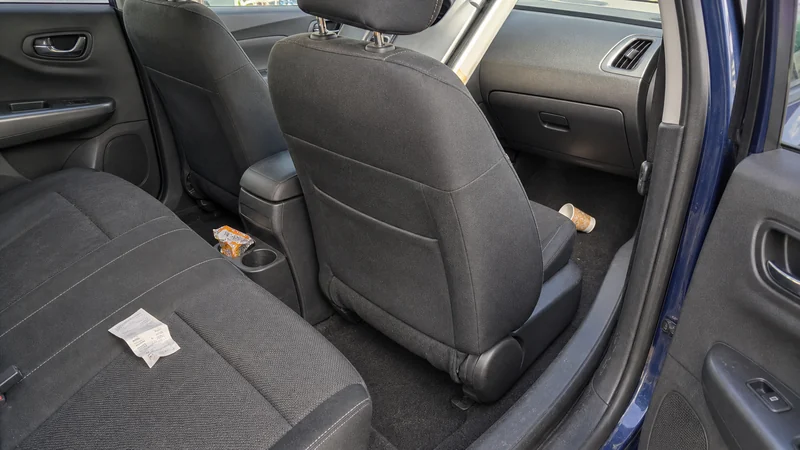
Match the format to the trash route
This is a job-routing table, not a first-to-second ranking. The two options do not belong in the same physical location and were not tested side by side by Digital Derek.
Why Lusso is the interior hanging option
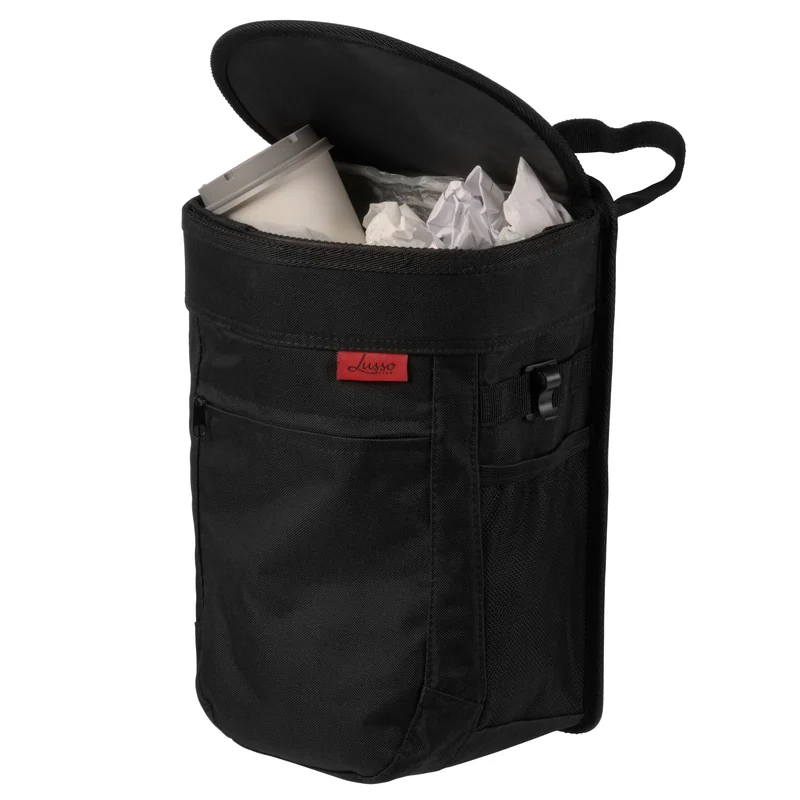
Automoblog reports testing five car-trash-can formats for installation, storage capacity, and features. It selected the exact Lusso Gear model overall, citing its form and capacity, while also noting that it cost more than some alternatives at the time of that publisher's test.
Lusso Gear currently identifies the product as a 2.5-gallon fabric car trash can with a flip-top lid, exterior pockets, hooks for a disposable bag, and a removable liner. Those manufacturer details establish the product identity and intended format; they do not prove fit in a particular car, spill containment after wear, odor control, or long-term durability.
The useful distinction is placement. A headrest strap can put the bin behind a front seat or in another compatible location, but the actual cabin decides whether that interferes with a passenger, a child-seat setup, seatback storage, or the driver's reach. Do not hang or reach for anything while driving if it requires attention away from the road.
Why Rhino is a campsite—not interior—option
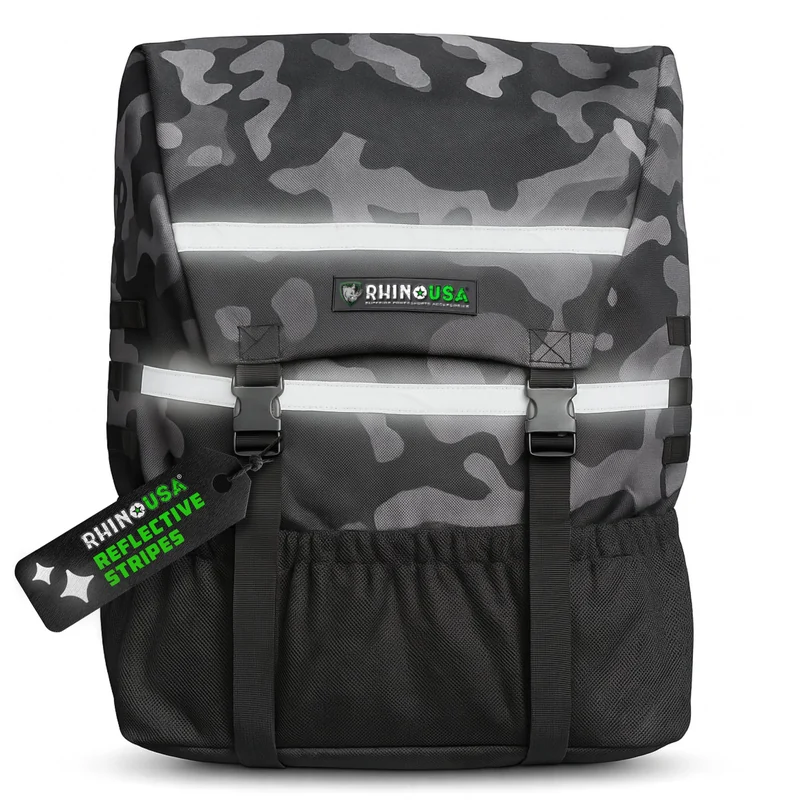
Car and Driver tested car trash cans for build, measured volume, installation, and water retention. Its current camping selection is the exact Rhino USA spare-tire bag. The publication reports a large capacity and easy installation, but also says it would not leave the bag mounted while driving on a highway or rough terrain. It further reports that the lining is not seam-sealed and that liquid can leak from inside without a separate trash bag or liner.
Rhino USA identifies the product as an exterior bag for rear-mounted spare tires up to 40 inches and lists a 25-gallon capacity. The manufacturer says it is intended to remain mounted at highway speed, but that claim conflicts with Car and Driver's more cautious field judgment. This comparison keeps the stronger limitation: treat it as a parked campsite collection system unless the exact vehicle, installation instructions, load, local rules, and planned driving conditions have been independently resolved.
Run a seven-day trash-route audit first
Before buying a bin, use one disposable or washable bag only while the vehicle is parked and record what actually accumulates for seven days.
- Sort the waste by where it appears: driver, front passenger, rear seat, cargo area, or campsite.
- Note the largest recurring item and whether it contains liquid, food, a sharp edge, heat, or odor.
- Mark the shortest safe placement that a passenger can reach without crossing controls, visibility, moving seats, doors, airbags, or foot space.
- Measure that location and the removal path. Include the opening, lid travel, strap or clip, full bag, and the route out of the vehicle.
- Empty the temporary bag on the schedule you would actually maintain.
This free test can reveal that a tiny cupholder bin is enough, that two small collection points are better than one large one, or that regular removal solves the problem without a dedicated product. It cannot prove a product's fit, cleanability, leak resistance, retention while moving, or long-term wear.
Placement matters more than the headline capacity
Reach without distraction
A bin that is easy to reach while parked may be distracting while driving. Set the rule that trash waits until the next safe stop. Do not mount a container where it blocks a control, pedal area, sight line, airbag path, door, or normal seat movement.
Full-size removal
Measure the bin when loaded, not only when collapsed. A soft container can fit an empty gap and then become difficult to lift past a console, passenger, child seat, or door opening.
Wet waste and cleaning
Publisher water tests describe a test condition, not a forever guarantee. Disposable liners can have holes; seams and coatings can age; a lid can retain odor. Remove liquids and food at a safe stop, follow the product's care instructions, and do not treat an organizer as secure hazardous-waste storage.
Exterior loads
Anything outside the passenger cabin adds attachment, visibility, road-debris, weather, security, and driving-condition questions. Confirm the permitted load and driving conditions in the exact installation instructions before using it on the road.
Keep everyday rubbish within easy reach
Choose Lusso when a measured interior hanging location fits the real weekly trash route. Choose Rhino only for the separate compatible-spare campsite option, with Car and Driver's driving and lining cautions kept visible. If the seven-day audit shows the real solution is simply removing a small bag at every stop, do that before adding another permanent object to the car.
For the mess already in the cabin, use the guide to clean between car seats without forcing a tool. For larger cargo, compare trunk organizers by containment and anchoring.