
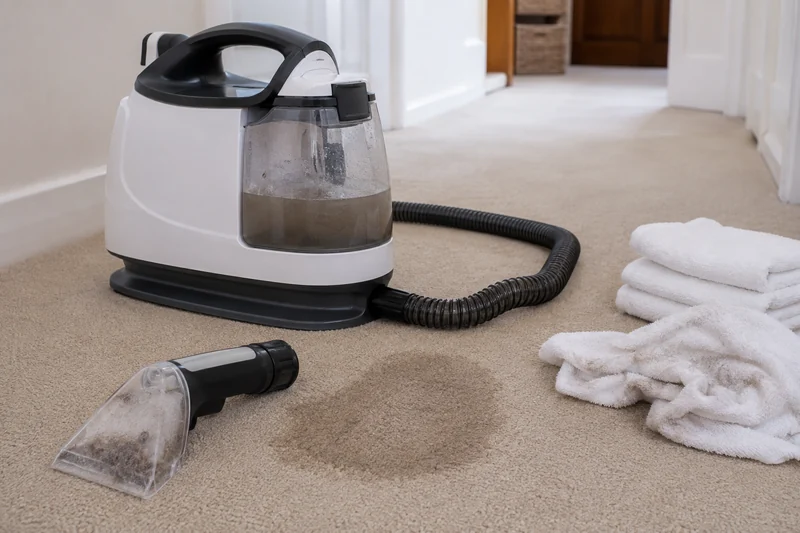
Start with one clean-water pickup test
Weak extraction can come from a full tank, poor tank seal, clogged filter, blocked nozzle or hose, air leak, tool angle, or a machine that is not level. Do not add more cleaning solution while diagnosing pickup.
Follow the exact manual, then test a small amount of clean water on a compatible surface or as the manufacturer directs. Compare how much water is applied with how much returns to the dirty tank. Keep electricity and plugs away from wet areas.
Read the pattern
| Symptom | First inspection |
|---|---|
| Motor runs but little water enters the tank | Dirty tank limit, tank seating, lid, seal, filter, nozzle contact |
| Pickup changes when the hose moves | Hose kink, crack, loose connection, or internal blockage |
| Tool pulls air around the edges | Nozzle not flat, uneven surface, debris, or damaged lip |
| Suction fades during the job | Full dirty tank, foam, filter contamination, or overheated/blocked airflow |
| Area looks clean wet but stain returns dry | Excess solution, incomplete rinse/extraction, deeper spill, or slow drying |
The returning stain and weak pickup can be related, but they are not the same diagnosis.
Reseat the tanks and seals
Turn the machine off and unplug it before removing parts. Empty the dirty tank when it reaches the documented limit. Reinstall lids, floats, plugs, gaskets, and tanks in the correct orientation until they sit fully in place.
BISSELL's HydroSteam support guidance specifically tells users with low suction to empty the tank, clean the filter, and operate the machine on a level surface. Those exact-model steps illustrate why a machine can sound normal while a small air leak prevents useful pickup.
Inspect seals for debris, twisting, cracks, or missing pieces. Replace parts only with the exact compatible component and documented procedure.
Clear the filter, nozzle, and hose
Remove hair, lint, and debris using the manufacturer's approved cleaning method. Do not insert sharp tools, pour unapproved chemicals through the machine, or open a sealed motor housing.
Look through a clear nozzle for buildup along the pickup opening. Inspect the hose from end to end for a kink, collapse, crack, or loose connection. A hose that changes suction when bent usually needs support or replacement rather than more solution.
Let washed parts dry as directed before reassembly or storage.
Improve tool contact and dry passes
Hold the tool at the angle shown in the manual so the nozzle lip maintains contact. Move slowly enough for water to reach the pickup path, but do not grind the tool into the material. After the wash pass, release the spray control and make additional extraction passes until visibly less water returns.
If the surface is uneven, test a smaller section and adjust the direction of the pass. A wider tool can lose its seal across deep texture or edges even when the motor is working.
When a stain returns after drying
A spill can move below the visible fibers. Too much solution, incomplete rinse, or slow drying can allow residue or discoloration to move upward as moisture evaporates. Blot rather than scrub, use only an approved product and amount, extract thoroughly, and provide safe airflow until fully dry.
Do not repeatedly soak an uncertain material. If color transfers, odor persists, the backing stays wet, or the stain involves a hazardous substance, stop and use an appropriate professional service.
When repair or replacement is reasonable
Use manufacturer support when the exact machine still has poor pickup after the tanks, seals, filter, nozzle, hose, level position, and tool contact are correct. Record the model, tank fill levels, solution, surface, error lights, and the result of the clean-water test.
Replacement becomes reasonable when a cracked hose, failed seal, pump, or motor cannot be safely repaired or supported. A compact cleaner that works but needs constant refills on a large recurring patch may simply be the wrong format.
Bottom line
Empty and reseat the tanks, restore the air path, keep the machine level, hold the nozzle flat, and use slow dry passes. Then separate true suction loss from residue, deeper staining, and incomplete drying.
If the current machine works but the route is inefficient, map the job with the portable-cleaner guide and compare the three cleaner lanes.