
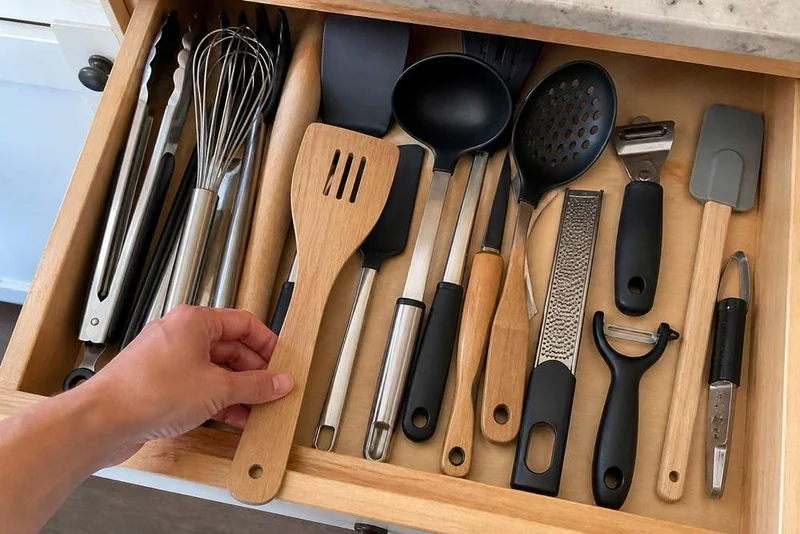
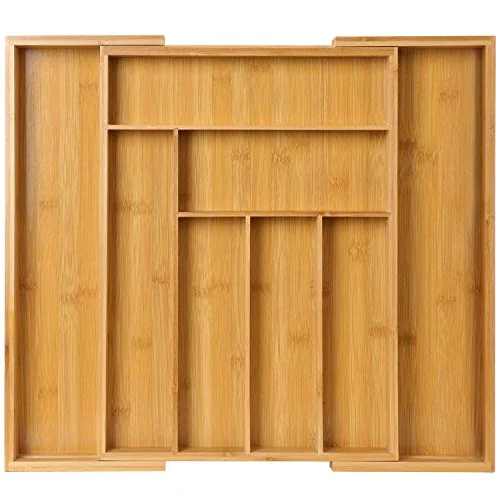
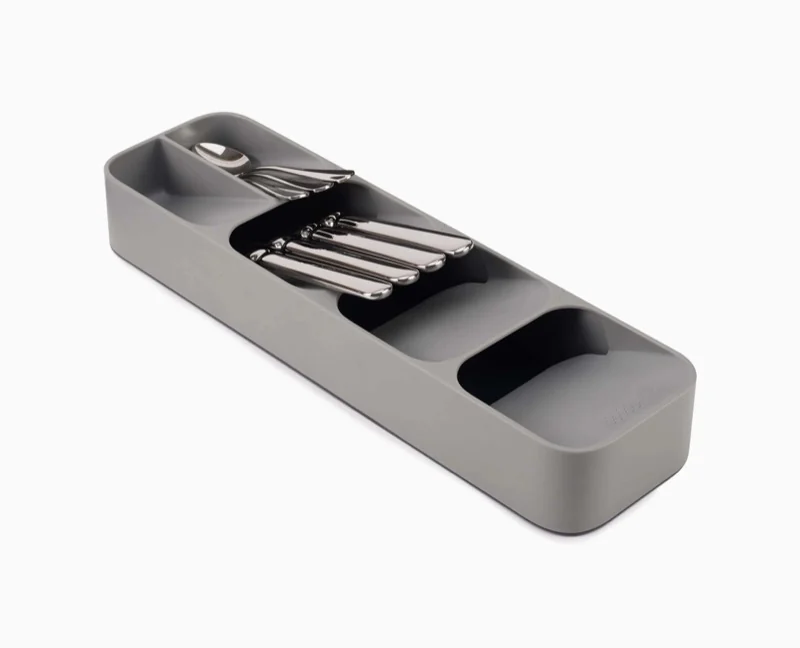
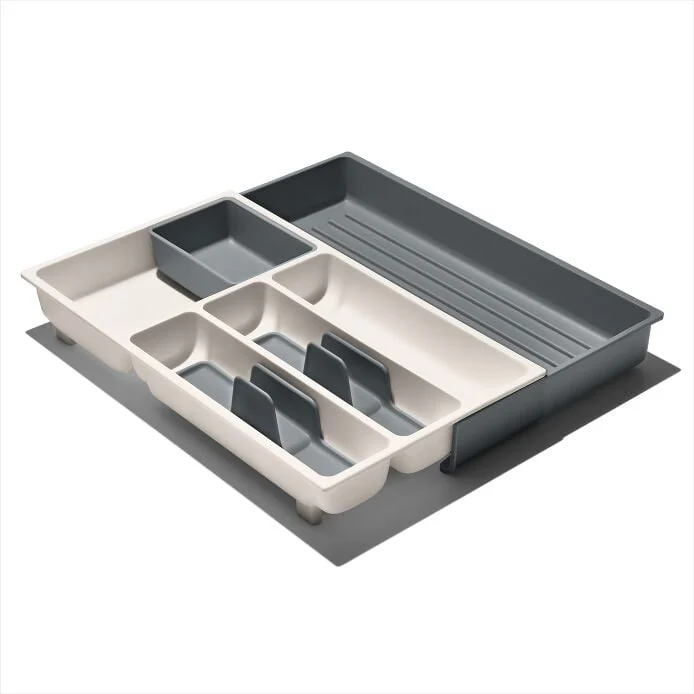
Product identity sources: Pipishell's current PIBCT page, Joseph Joseph's DrawerStore collection, and OXO's exact organizer page. The images identify the products. They do not show Digital Derek use, fit, cleaning, or durability testing.
What the current research actually says
This shortlist uses disclosed methods and visible limitations instead of counting confident headlines as votes.
| Source | What it did | Useful finding | Limitation |
|---|---|---|---|
| Serious Eats | Tested 13 organizers with the same flatware and tools; checked fit, shifting, expansion, clearance, and cleaning | Pipishell led its expandable test; material, compartment shape, and expansion design changed usability | One large test drawer cannot establish fit in your kitchen |
| Epicurious | Author reports trying at least seven systems across changing kitchens | Square corners, non-slip behavior, reconfiguration, and space for long tools matter | Qualitative single-household experience; its OXO choice is a broader modular family |
| The Kitchn | Tested three spring-loaded bamboo divider systems | Divider spacing and usable length can create wasted space or fit failures | Dividers solve a different job from trays and should not share one universal ranking |
Across these sources, the useful distinction is the layout: open compartments suit bulky tools, while stacked cutlery storage trades height for a narrower footprint.
Choose by the problem you need to solve
Best current expandable research lead
Serious Eats selected the exact Pipishell Bamboo Expandable Drawer Organizer after testing 13 organizers. That makes it the strongest current publisher-tested expandable lead in this panel—not a Digital Derek best overall.
Its current manufacturer page describes six to eight compartments and an adjustable width. Treat those measurements as manufacturer claims until you compare the exact outside dimensions and loaded height with your drawer. Bamboo also changes the cleanup question: wipe-and-dry care is not the same as washing a plastic tray.
Best compact research option for a narrow drawer
The Joseph Joseph DrawerStore Compact Cutlery Organizer turns forks, spoons, and knives into stacked compartments. That can preserve drawer width, but the tradeoff is not free. Serious Eats found the stacked format more difficult to retrieve from and clean than conventional open compartments.
Use it when width is the actual constraint and the drawer has enough closed height. Do not treat “compact” as proof that it holds more, fits every shallow drawer, or makes utensils easier to return one-handed.
Best plastic challenger for easier cleanup
The OXO Good Grips Expandable Utensil Drawer Organizer is the plastic-format challenger. It gives readers a material and layout alternative to bamboo, including removable caddies and space for irregular tools.
The exact Serious Eats test also records the limitation: its expansion uses fixed notches rather than continuous adjustment, and the organizer did not sit perfectly flat when extended. Epicurious likes a broader OXO modular system, but that is not an independent exact-product win for this ASIN.
Choose the layout around your everyday utensils
Give long spatulas and ladles one clear compartment. Use stacked cutlery storage when forks, knives and spoons take most of the space; use an expandable layout when the mix changes. Allow for the tallest handle with the drawer closed.
The kitchen utensil drawer guide helps arrange that mix. For a custom layout, compare separate bins and adjustable dividers. The drawer-fit checklist covers clearances before ordering.
The details that make daily use easier
Expandable wings can create shallow or awkward zones
Expandable trays increase width, but the added space may be shallower, broken into fixed notches, or separated by edges that catch debris. Compare the fully expanded interior—not only the marketing width range.
Organizer walls consume capacity
Every divider, caddy, and stacked compartment takes space. A beautifully segmented tray can hold fewer bulky utensils than a simple open compartment. Product dimensions tell you whether the shell fits; they do not prove useful capacity with your items.
Material changes the ownership work
In Serious Eats' cleaning tests, plastic organizers were generally easier to clean, while bamboo needed more careful drying. Follow the exact product's care instructions. These tests do not establish long-term durability or hygiene.
A deep drawer does not guarantee easy retrieval
Extra height can permit stacking, but buried utensils may become slower to identify and return. Check how easily you can find and put away utensils, as well as how many fit inside.
Before ordering
Current seller, price, stock, delivery, returns, warranty, and listing continuity remain offer-specific. The exact links are for checking the verified identities; the decision roles still depend on fit and use.
Frequently asked questions
What is the best drawer organizer for kitchen utensils?
There is no universal best. Start with the smallest usable drawer dimensions and the longest tools. Pipishell is Serious Eats' tested expandable pick, Joseph Joseph targets narrow-width flatware storage, and OXO is the plastic expandable alternative.
What works best for large kitchen utensils?
Large spatulas, tongs, ladles, and whisks usually need one long open compartment. An expandable tray can work when its long compartment matches the tools, but adjustable dividers may waste less space when most items are irregular or bulky.
How do I know whether an organizer will fit?
Measure usable width, depth, and closed height at multiple points, keep the smallest value on each axis, subtract obstructions, then make a paper footprint at the exact organizer dimensions. Test it with the real utensils before buying.
Is bamboo or plastic better for a utensil organizer?
Choose by the work you care about. Plastic is generally easier to wet-clean, while bamboo offers a different appearance and structure but may require more careful drying. Fit, compartment shape, stability, and retrieval matter more than material alone.