
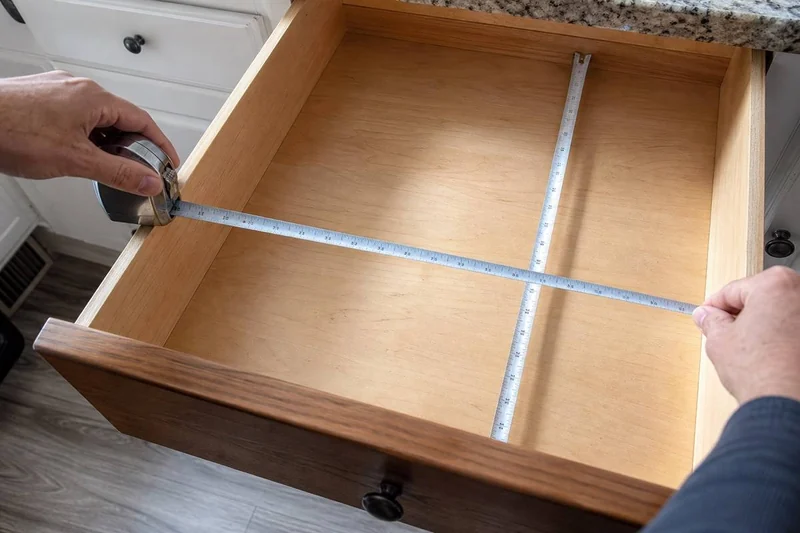
Measure the usable inside space
Check inside width at the front, middle and back; depth at the left, center and right; and available height along the closing path. Keep the smallest usable width and depth, allowing for projecting hardware. Drawer Essentials specifically asks for measurements in three positions on each axis and the shorter value when they differ.
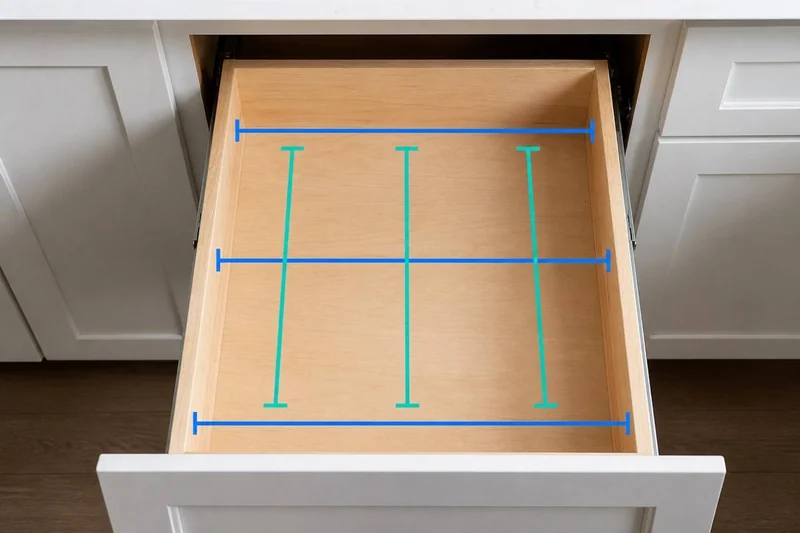
To check a proposed height, use a soft paper or cardboard stand-in and move the drawer gently. Stop at resistance. The goal is to find the obstruction, not push the drawer past it.
A tray can fit while the loaded drawer cannot close
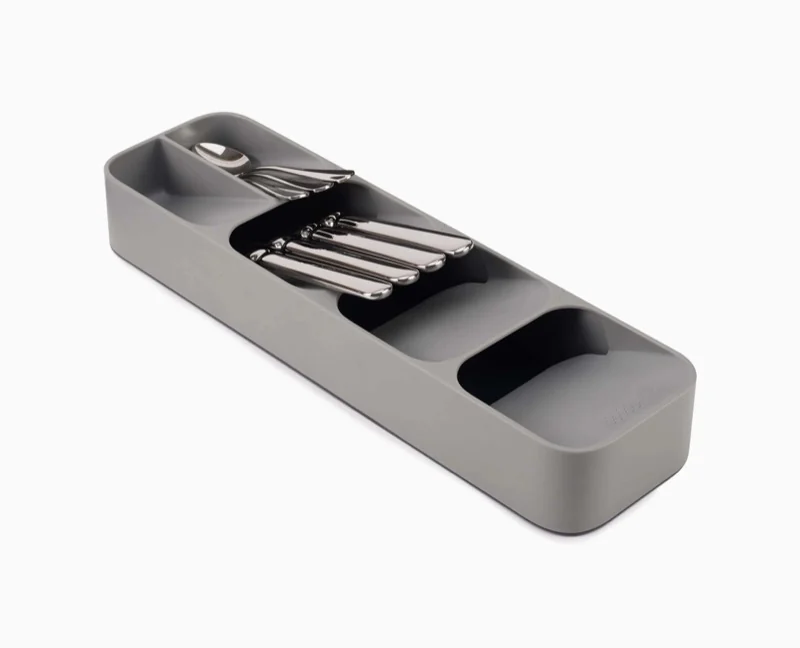
An empty organizer sitting flat is only part of the fit. Raised utensil handles, an angled cutlery tray or hardware near the opening can occupy the space the drawer needs as it closes. Check the loaded height before buying a layout that saves width by stacking items.
| Where it fails | What to compare | Useful change |
|---|---|---|
| The tray will not drop in | Organizer outside dimensions versus the narrowest usable interior | Choose a smaller footprint or a different layout |
| It fits empty but catches when loaded | The highest stored item versus the closing path | Use a lower layout or move the tall items |
| The drawer closes but utensils do not fit | Inside compartment length and width | Choose longer lanes or adjustable dividers |
| A custom insert arrives too tight or too loose | The maker’s ordering and allowance instructions | Check whether the maker applies the allowance before subtracting anything yourself |
Do not apply the allowance twice
Custom makers handle clearance differently. Salt by Sabrina tells buyers to choose the next lower half-inch size, including when the measurement already lands on a half-inch. Drawer Essentials says it reduces the insert’s width and depth by 1/16 inch.
The useful distinction is who applies the allowance. Follow the ordering instructions for that exact product. Do not automatically subtract a second allowance when the maker already makes the reduction. If the page only gives inside compartment dimensions, you still need its outside footprint to check the drawer.
Try the compartment, not just the rectangle
Draw the proposed footprint and compartments on scrap paper, then place the real contents in position. Check the longest utensil, the highest handle and the item you use most often. This exposes a layout that fits the drawer but makes the contents harder to reach.
The Joseph Joseph DrawerStore Compact Cutlery Organizer is one angled option to compare with that loaded-height check. For long utensils or mixed items, compare bins with adjustable dividers before choosing a set. The organizer shortlist keeps the existing product research in one place.