
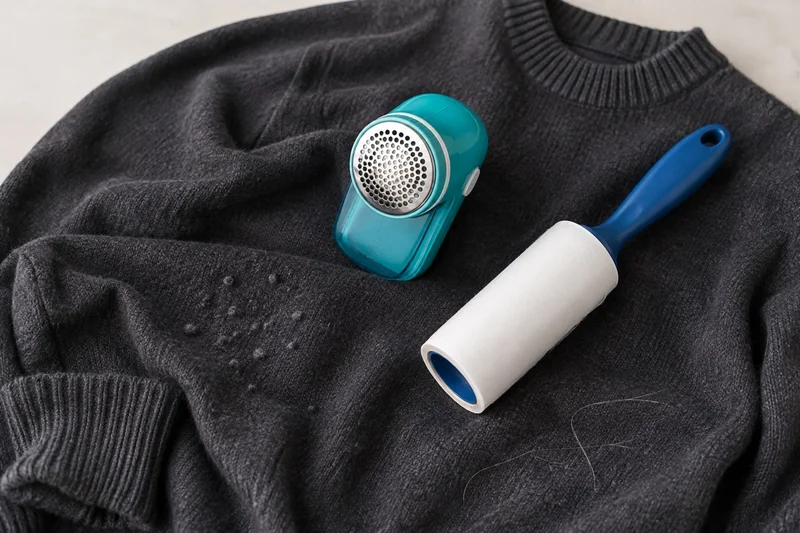
Buy for the care job you repeat
A quick coat touch-up before leaving home and de-pilling several sweaters are different jobs. Once you have identified lint or attached pills, choose the amount of equipment that makes that job easier.
| Your recurring job | Useful starting point | What would justify changing tools? |
|---|---|---|
| Lift loose hair or lint from an outfit | A suitable brush or roller | Refill burden, difficult handling or poor results on the intended finish |
| Remove a few isolated pills | Gentle manual removal or a garment-appropriate comb | The amount of compatible material makes careful manual work impractical |
| De-pill a larger area of suitable fabric | A guarded fabric shaver | Better control, easier cleaning or a power arrangement you prefer |
| Care for an open knit, decoration or uncertain finish | Garment-specific instructions | Match the tool to the garment’s care instructions and surface |
Patagonia’s care guide discusses rollers for loose or less persistent material and other tools for attached pilling. Woolmark also describes careful combing and shavers for wool. Neither makes every garment suitable for powered trimming.
The useful upgrade is control
For a shaver, check the guard, access for cleaning, power source and replacement parts. More speed settings do not establish safer removal. For a roller, check refill availability and whether the adhesive suits the finish you intend to maintain.
A rechargeable shaver may suit frequent sessions if charging fits your routine. A replaceable-battery model avoids waiting for a built-in battery to charge when you have the right fresh batteries available. Compare the Conair and Magictec options by guard adjustment and power after the tool format fits the job.
Make the first pass a small one
Follow the garment label and exact tool instructions. Use a hidden area, lay suitable fabric flat and inspect before continuing. Stop if the tool catches or the texture changes.
The Philips GCA2100 manual instructs users to avoid heavy pressure and details such as embroidery, zippers and buttons. Your model’s instructions control its use; the test area is our additional precaution.
Removal does not change the garment’s tendency to pill. For patches that return, use the care and friction guide alongside the removal tool.