
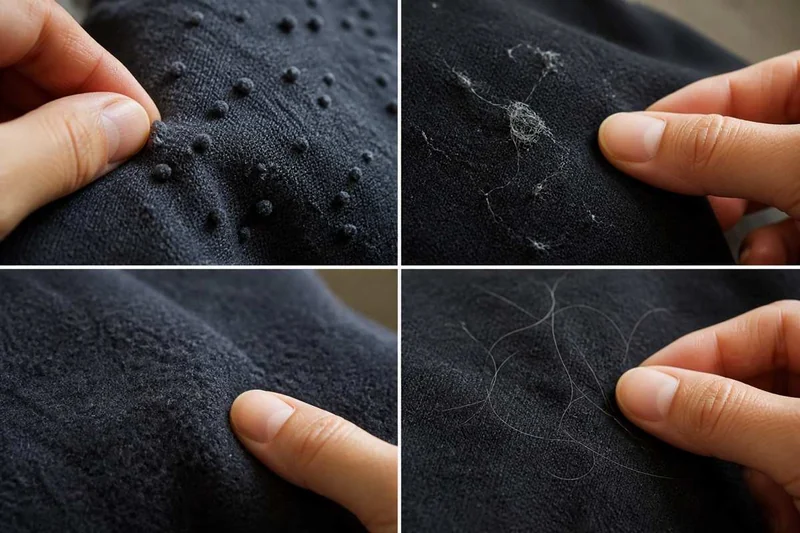
Identify pills, loose lint, hair and fabric texture
Set the garment in good light and inspect a small area without tugging. A roller can collect loose debris while attached pills remain, so a partly cleaner surface does not necessarily mean you need a stronger roller.
| What remains | What it suggests | Useful next step |
|---|---|---|
| Small compact balls connected to the cloth | Pilling | Check whether the garment permits gentle combing or a fabric shaver |
| Loose specks that lift away | Surface lint | Continue with a suitable brush or roller and look for the source of transfer |
| Long separate strands across the cloth | Hair or loose fibers | Use a suitable lifting tool rather than cutting the garment |
| An evenly raised or fluffy surface | Fuzz, texture or nap | Check the garment’s intended finish before trying to remove it |
These are inspection clues, not a fabric identification test. An open knit or unfamiliar finish needs garment-specific care advice.
Lint roller not working? Check what remains
If the roller picks up loose debris but leaves attached balls, stronger adhesive may not solve the problem. The remaining material needs a different care decision. If the roller fails to pick up loose material at all, check its condition and instructions before treating the garment as pilled.
Choose removal for the material
Woolmark describes gentle combing and fabric shavers as possible treatments for wool pills. It also explains that rubbing during wear contributes to pilling. That means removing today’s pills does not prevent new ones.
If attached pills are the issue, compare a shaver, roller and comb for the garment and amount of work. A shaver is a possible next tool, not an automatic upgrade for every fuzzy surface.
If the same patch keeps returning
Look at where the change appears. A patch at a bag strap or under an arm gives you a contact point to examine. If it follows laundry, check the permitted care and what shares the load. The pilling-cause guide helps interpret the pattern; the prevention guide covers care changes.
Stop treatment if the material catches, thins or changes texture. For loose debris, keep the lifting tool that works. For attached pills on a suitable garment, the fabric-shaver comparison covers the exact product options.