
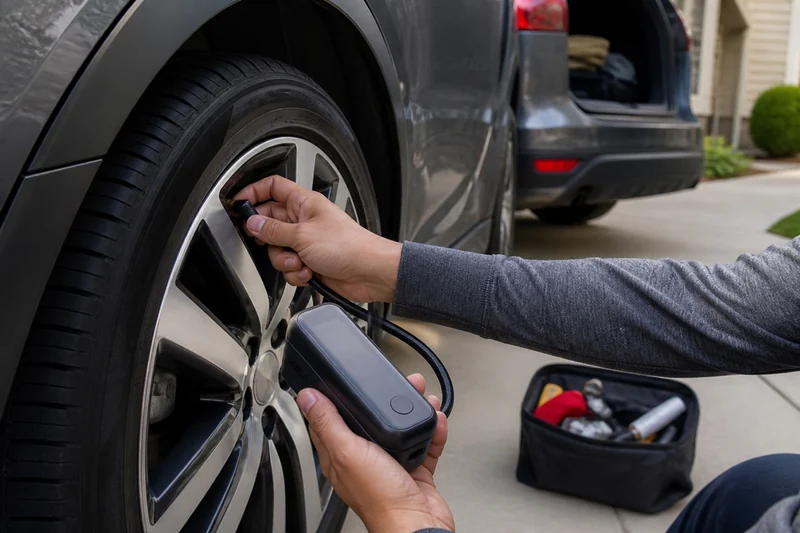
Match the inflator to your tire and power source
Start with the largest tire you need to fill and the power source you can use at the roadside. A compact rechargeable inflator can suit a passenger-car top-off, while a direct-battery or tool-battery model may make more sense for a larger tire or repeated work. Maximum PSI alone does not tell you which one will be convenient or fast for your job.
Car and Driver compares inflation time and usability across several formats. Outdoor Life tests a large LT275/65R18 truck tire and records speed, heat, noise, and battery behavior. CNN Underscored uses another current panel and selects different exact products. Use those results as job-specific evidence, not as one universal winner.
A rechargeable unit that is convenient for a small top-off can be the wrong tool for a large, low truck tire. A fast battery-platform inflator can be unnecessary if you do not own the compatible battery and charger. A direct-battery compressor can suit a larger job while adding setup and under-hood access.
Car and Driver, Road & Track, and Good Housekeeping are not counted as three independent votes here. They share Hearst ownership, and related pages may reuse or reference the same testing. Digital Derek treats that as one evidence family.
Choose by the actual inflation job
| Your job | Research option | Why it fits | The catch |
|---|---|---|---|
| Occasional passenger-car top-off with multiple power options | AVID POWER ACAP115D-O | AC and vehicle-DC inputs reduce dependence on a charged internal battery | Match the tire size and duty cycle to occasional top-offs |
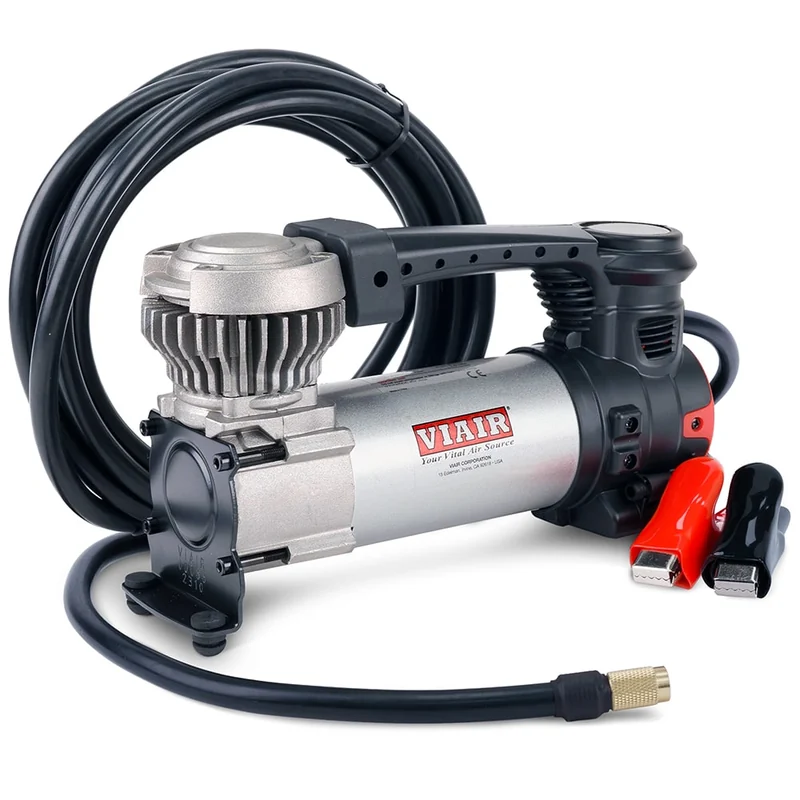
| Larger tire, direct vehicle-battery power, off-road kit | VIAIR 88P | Current test placement and VIAIR's official compressor family support the direct-battery specialist role | Battery clamps, hose reach, analog gauge use, heat, and duty cycle add setup |
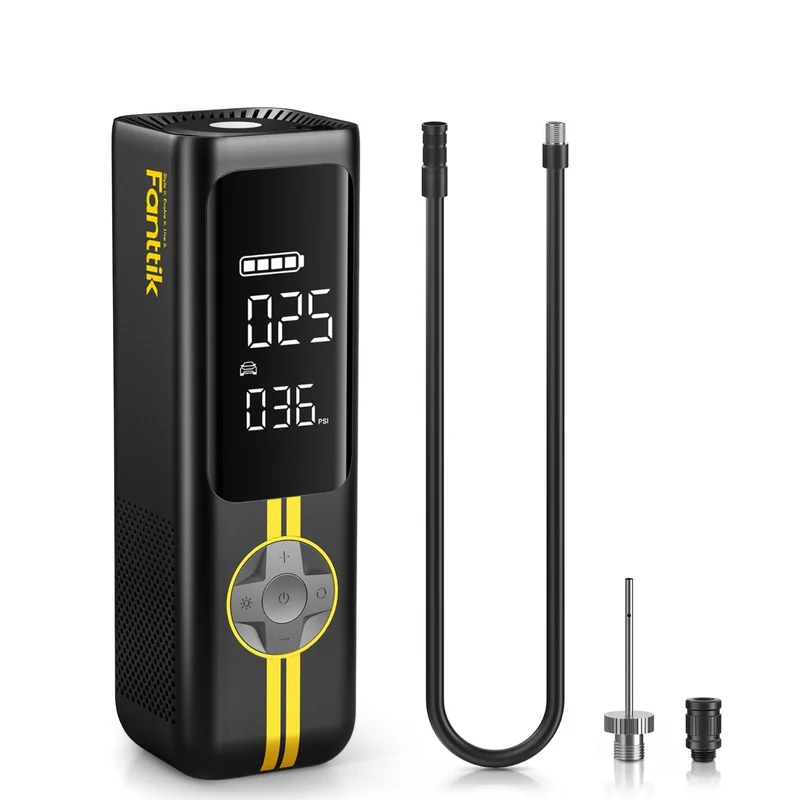
| Compact trunk kit and rechargeable portability | Fanttik X8 APEX | Outdoor Life places it in the compact option, and Fanttik publishes exact battery and operating limits | Recharge state, tire size, heat, and no-use-while-charging behavior bound the job |
| Repeated fast inflation inside an existing M18 system | Milwaukee M18 Inflator | It leads the demanding Outdoor Life panel and performs strongly in the Hearst test family | Allow room for the larger tool and include a compatible M18 battery and charger in the setup |
The Slime 40088 is not included in this comparison lineup. Its current structured commerce response contained feature text from a different tire-repair product. A matching title is not enough to override contradictory identity data.
Four checks before comparing specifications
1. Record the largest tire size
Use the tire-sidewall size and vehicle placard. A test on a passenger-car tire does not automatically transfer to a truck, SUV, trailer, or high-volume off-road tire. Read the maximum PSI alongside airflow and fill-time information for a tire size close to yours.
2. Define the starting condition
Topping up from 31 to 35 PSI is a different thermal and runtime job from raising a large tire from 10 PSI or from flat. Compare tests only when the starting and target conditions are visible.
3. Choose the power tradeoff
- Internal rechargeable battery: fastest setup, but only when charged.
- Vehicle accessory socket: simple connection, bounded by outlet and fuse rules.
- Direct battery clamps: more setup, potentially better suited to sustained work.
- Tool-battery platform: useful when the compatible battery and charger are already owned; expensive when they are not.
Read the exact vehicle and inflator manuals. Do not improvise a power connection or exceed a stated duty cycle.
4. Treat heat and gauge behavior as decision factors
Inflators can become hot, pause, or require a cooldown. Gauge placement, auto-stop behavior, hose removal losses, and a separate reference gauge can change the practical result. For several tires in one session, check the duty cycle and cooldown requirements as well as the first fill time.
The before-you-buy tire-fit card
Before shopping, record:
- largest tire size in the household;
- normal cold-pressure target;
- worst realistic starting pressure;
- available power sources;
- maximum acceptable setup time;
- whether batteries and chargers are already owned;
- storage temperature and recharge reminder.
If a option's disclosed test never approaches that job, remove it from the shortlist. This card does not predict performance, but it prevents a compact marketing claim from being mistaken for a heavy-duty test.
Match the inflator to your tires and power source
Choose the power source and tire job before comparing products. AVID POWER is the flexible dual-power baseline, VIAIR 88P is the direct-battery larger-tire specialist, and Fanttik X8 APEX is the compact rechargeable option. Milwaukee M18 remains the premium performance benchmark but is not in the active affiliate lineup until a current exact offer is verified.