
Start with what moves
A trunk organizer has two jobs: contain the cargo and keep the container from moving. Pocket count matters only after both are solved.
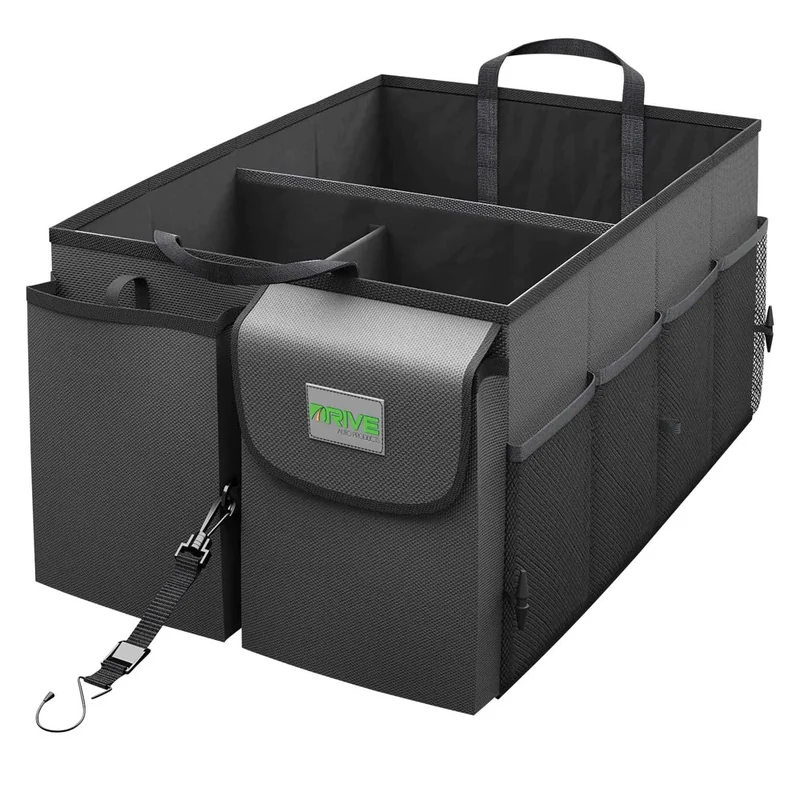
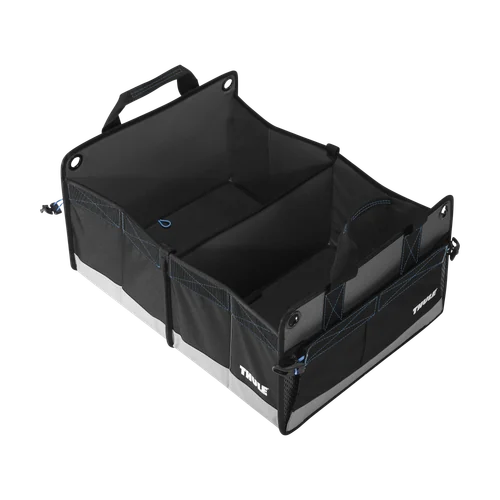
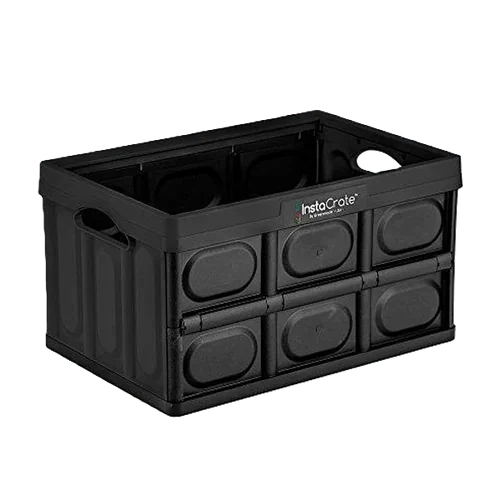
Car and Driver selected the Thule Go Box overall, Drive as its budget option, and GreenMade InstaCrate for versatility after a grocery-load driving test. Popular Mechanics selected Drive overall through a mixed experience-and-research method. Travel + Leisure selected K Knodel through editorial research. Those are different products, roles, and methods—not a clean vote.
Product identity sources: Drive's current retailer listing, Thule's manufacturer page, and the GreenMade brand page. The photos identify the formats and locked test options; they do not prove movement control or current value.
Run the before-you-buy road check
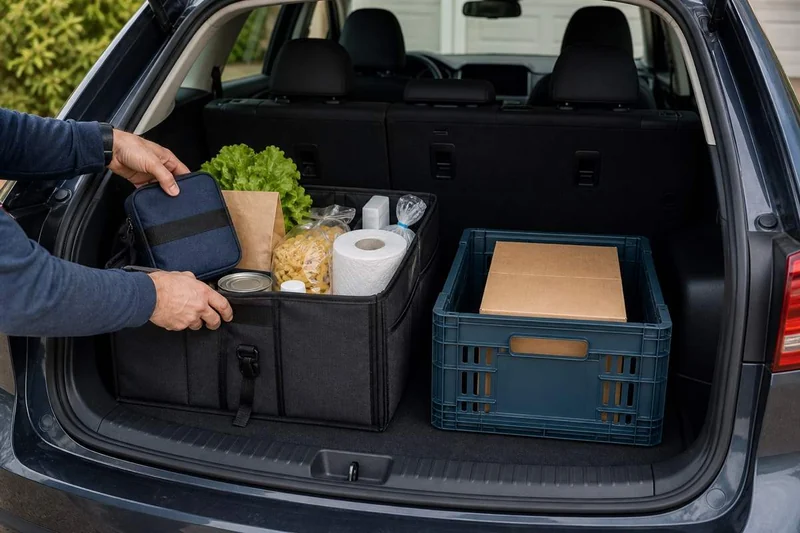
Empty the trunk, remove what does not belong there, and place the routine load in a box or crate you already own. Drive your normal route and note what shifts, tips, blocks access, or steals space from groceries and luggage.
Measure the usable footprint after accounting for wheel wells, seat angle, a stroller, and permanent emergency gear. Product photos hide scale; loaded dimensions do not.
If the real problem is debris beside a seat rather than loose cargo, use the between-car-seat cleaning guide instead of buying another storage product.
What the driving test adds
Car and Driver loaded each organizer with groceries in a Dodge Challenger and repeated an aggressive route three times. It then checked movement, capacity, construction, customization, and spill-related features. That method exposes a common roundup weakness: a trunk can look tidy while parked and fail at the first hard turn.
Containment is not anchoring
Walls keep cans, bottles, and small gear together. Straps, hook-and-loop backing, rubber feet, or another compatible attachment help the organizer itself resist movement. A product can do one job well and fail the other.
Check the vehicle before relying on hook-and-loop or straps. Trunk liners and attachment points vary, and an organizer should not interfere with seats or cargo access.
Soft, rigid, and block systems are different tools
Soft organizers adapt to odd shapes and usually collapse more easily. Rigid crates support upright or fragile items but keep a larger fixed footprint. Corner blocks can frame a box, but Car and Driver found them less effective with loose groceries during its driving test.
How the options compare
The Drive Compact Car Trunk Organizer is the current lower-cost contained option. Car and Driver selected the 23 × 17 × 10.8-inch version as its budget option, while Popular Mechanics selected a Drive organizer overall. That price role helps readers compare options; it does not make Drive the default Digital Derek purchase. Because brand names span multiple sizes and listings, the verified product identity is UPC 635635176471 / ASIN B01F9IS2Y8 .
The Thule Go Box Large is the premium head-to-head comparison because it led the direct driving test. The GreenMade InstaCrate stays in a separate rigid-crate option rather than being ranked as a substitute for a soft organizer.
Those identities were checked on August 30, 2026. Seller, price, stock, shipping, returns, and warranty remain offer-specific, so this page makes no deal claim.
Make the final fit check
No review set can predict the grip of your trunk liner, the location of your tie-down points, or the shape of your normal load. Start with the existing-box test, then compare products only within the same cargo role and footprint.
Frequently asked questions
Is a rigid trunk organizer always more stable?
No. Rigid walls help contents keep their shape, but the entire crate can still move when it does not match the trunk surface or anchor system.
Do I need a lid?
A lid can hide contents and contain light items, but it slows access and may not fit tall cargo. Choose based on privacy, stacking, and access—not appearance.
Will hook-and-loop grip every trunk liner?
No. Liner materials vary, and a strong grip in one vehicle may be weak in another. Check the actual liner and attachment points before relying on an anchoring feature.