
Start with one location or the main supply
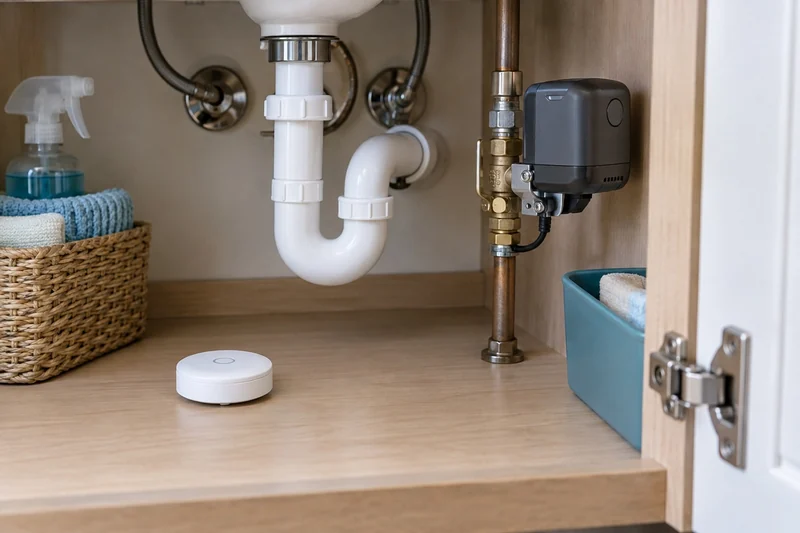
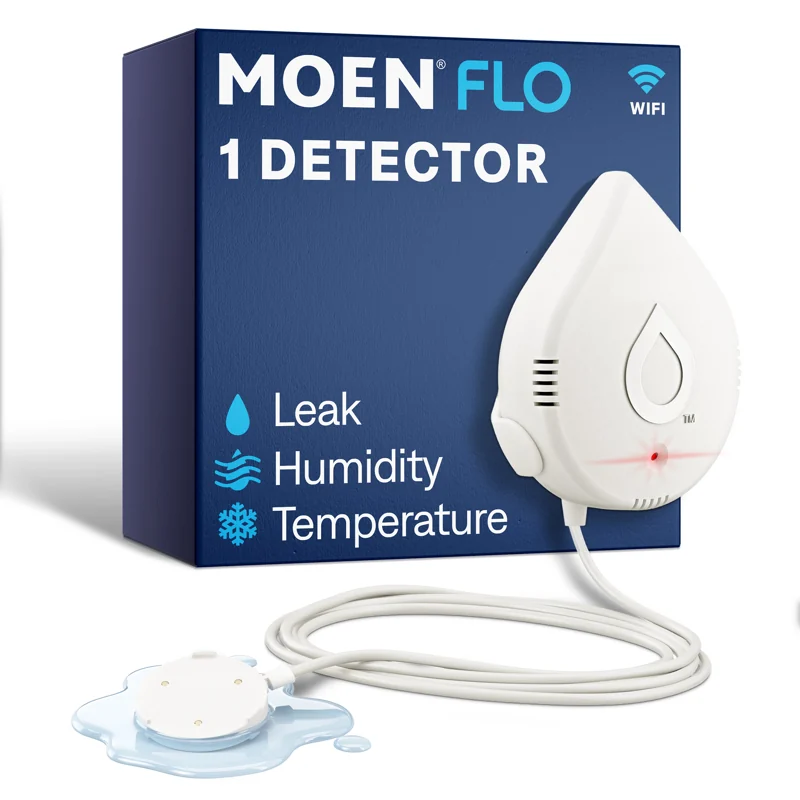
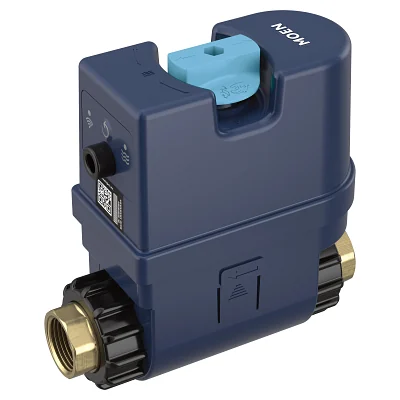
The two Moen products above show the practical difference within one compatible system. They are separate purchases, not a bundle or a claim that Moen leads the whole category. Other sensors and shutoff systems may suit a different smart-home setup.
Choose the 920-004 detector for a specific wet-floor concern. Choose the 900-001 valve when automatic response to unusual flow is the reason to upgrade. Use both when you want local moisture detection to trigger an installed compatible valve, with that action enabled in the app.
Separate a spot check from ongoing protection
A water alarm watches for a new event; a handheld meter helps check a material at a particular time. If you want to compare an accessible cabinet panel or wall patch, the pin versus pinless moisture-meter guide explains that separate tool choice. A meter reading does not replace a sensor, shutoff system or repair.
Match detection to the place and response
A sensor under one sink can warn you about water at that location. A whole-home flow monitor watches a different signal in the main line, and an attached shutoff can act when nobody is available. Choose the coverage and response first; smart-home features come later.
If water is present now, stop the source when it is safe, protect people and electrical equipment, and arrange the appropriate repair. A detector is an early-warning tool, not a repair for a leaking supply line, drain, appliance, roof, or foundation.
| Need | Useful starting format | What it can add | What remains exposed |
|---|---|---|---|
| Watch one sink, washer, water heater, or sump area | Point moisture sensor | Alarm or notification when water reaches that location | A leak outside the sensor's contact area may go unnoticed |
| Notice unusual use across the home | Whole-home flow or pressure monitor | Watches plumbing behavior rather than one floor spot | An alert still needs a person or connected system to act |
| Limit water while the home is empty | In-line monitor with automatic shutoff | Can close the main supply when its settings identify an event that calls for closure | Installation, power, connectivity, settings, and false-shutoff planning matter |
| Reduce several blind spots | Layered point sensors plus whole-home monitoring | Combines local moisture contact with system-level patterns | More devices create more batteries, tests, notifications, and maintenance |
Why the two formats see different problems
EPA WaterSense separates moisture detection from flow monitoring. Moisture sensors react when water reaches a chosen location. Flow or pressure monitoring looks for irregular plumbing use or patterns that may indicate a leak.
That creates a practical tradeoff. A point sensor can identify a wet floor under a specific fixture, but its coverage ends where it is placed. A whole-home monitor can watch the main water path, but it may not identify the exact room. Neither format guarantees that every slow seep, drain leak, weather intrusion, or intentional high-use event will be classified correctly.
When automatic shutoff is worth investigating
Automatic shutoff earns its complexity when delayed human response is the central risk: an often-empty home, finished space below plumbing, expensive water-sensitive contents, or a history that makes another event unusually costly. It is not automatically the better fit for a renter, a home without a suitable main-line location, or a buyer who cannot support installation and maintenance.
The Moen Flo support guidance illustrates the ownership checks for an in-line system: main cold-water-line access, correct pipe sizing, nearby continuous power, 2.4 GHz Wi-Fi, app setup, and its recommendation for professional installation. Moen also explains that the system can alert to abnormal use without locating the leak inside the home. Use those as a checklist for the exact system you are considering; requirements vary by model.
Build the response plan before buying hardware
Write down who receives the alert, who can reach the shutoff, and what happens if power, internet, the hub, or a phone notification fails. Mark the manual main shutoff and confirm that responsible household members can identify it. For an automatic valve, learn how to review and override an event safely after the cause is understood.
Use as you go
Your working checklist
0 complete
Coverage worksheet
Count installation in the complete cost
Price the valve, the plumber’s installation, any required fittings or power work, and the point sensors you want to add. Moen states that the Flo app and basic operation have no required monthly fee; optional protection services are separate. Confirm current service terms when ordering.
For the 900-001, confirm pipe sizing with the installer. Its current product page and older specification sheet differ on compatibility beyond the named ¾-inch size. That makes a plumber’s sizing check more useful than assuming a reducer will work. Ask the installer to demonstrate manual control and explain operation during an internet or power outage. A simpler sensor can be the better first move when the risk is concentrated and someone can act quickly. For the kitchen cabinet specifically, use the musty-smell diagnosis before adding storage or masking odor, and keep the sensor where a leak can reach it rather than behind an organizer that blocks inspection.
Choose the layer you can maintain
Use point sensors for named locations, whole-home monitoring for system-wide patterns, and automatic shutoff when limiting unattended flow is the supported goal. Layer them when the consequences justify the additional installation and upkeep. The useful system is the one whose alerts, batteries, connectivity, valve, and manual fallback you will test.
See the 920-004 detector for a named location, or see the 900-001 shutoff after confirming the plumbing fit.