
The short answer
Start by looking for moisture before deodorizing the cabinet. The smell is a clue: inspect for the water source and visible damage to understand what needs attention.
Empty the cabinet, document what you see, dry movable items, and check whether moisture or odor returns after ordinary sink or dishwasher use. If water returns or the cabinet is damaged, the next step is maintenance or a qualified professional—not fragrance, more storage, or a new liner.
Choose the right kind of measurement
A room hygrometer and a material moisture meter answer different questions. For comparing accessible cabinet or wall areas, see pin versus pinless moisture meters: finish damage, supported materials and reading scales determine whether either tool is useful. Keep locating and fixing the moisture source as the first job.
First, make sure the smell is actually musty
This guide is for a damp, earthy, or musty cabinet odor. A sewer-like, rotten, burning, or strong chemical smell is a different problem. Do not try to identify or repair an unfamiliar odor by following a generic cleaning hack. Stop using the area when appropriate, ventilate safely, and use the relevant landlord, maintenance, plumbing, utility, or emergency process.
Empty the cabinet without disturbing the plumbing
Remove stored items so you can see the cabinet floor, back, sides, and the area around visible pipes. Do not disconnect, tighten, or move plumbing. Keep hands, paper, and cleaning tools away from disposal wiring, outlets, and other electrical components.
Record the starting condition before wiping anything:
- damp spots, droplets, or condensation;
- dark stains or rings;
- swollen, soft, peeling, or warped cabinet material;
- rust or residue near a connection;
- a wet sponge, cloth, trash liner, or leaking product container; and
- whether the smell is strongest at the cabinet floor, stored items, drain, or trash area.
The US EPA's kitchen-cabinet guidance notes that leaking pipes under a sink can lead to mold in walls or cabinets and should be fixed by a qualified professional. The CDC says mold can smell musty and grows where moisture is present. Neither source says an odor alone identifies mold or the cause.
Try one no-buy return-moisture check
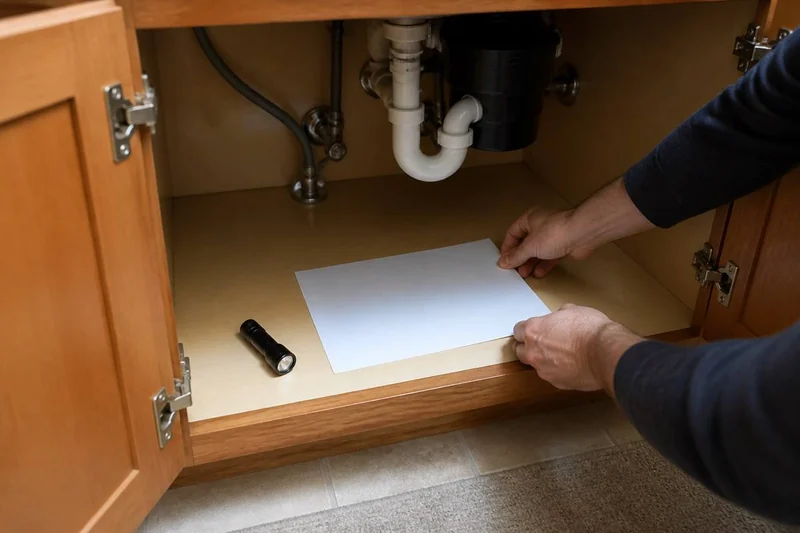
If there is no active water, visible mold, damaged material, or unfamiliar equipment, dry the clear cabinet floor and movable items. Place a loose sheet of plain paper on an open floor area where it will not touch pipes, wiring, a disposal, or stored chemicals. Do not wrap or tape paper around a connection.
Use the sink and dishwasher normally, then recheck the same day. Record any new wet mark, condensation, stain, or return of the odor. A wet result is useful evidence for a maintenance request. A dry result does not rule out a hidden or intermittent leak, condensation, drain problem, or mold behind a surface.
Add detection only after the repair path is clear
When the cabinet is dry and the source has been addressed, decide what an alert would change. A point moisture sensor can warn when water reaches that cabinet location, but it cannot see a leak elsewhere. A whole-home flow monitor watches a different signal, and a connected shutoff may act when nobody is available.
The water-leak sensor versus automatic shutoff guide compares those coverage and response jobs. Keep any point sensor visible, reachable, and low enough for water to reach it; do not bury it behind storage or treat an alarm as a repair.
Do not mask the source
Fragrance, baking soda, vinegar, lemon, a moisture absorber, or a cabinet liner may change the smell without correcting the moisture source. Do not combine cleaning products. Follow every product label and confirm that any cleaner is compatible with the cabinet surface.
EPA guidance says the key to mold control is moisture control: fix the water problem and dry wet materials. It also warns that hidden mold investigation can require an experienced professional. A quick deodorizing result is not evidence that the cabinet is dry or the underlying problem is solved.
Know the stop signs
Use the appropriate landlord, maintenance, plumbing, or remediation path when you find:
- active dripping, pooling, or moisture that returns;
- softened, swollen, warped, or delaminating cabinet material;
- visible mold or a persistent musty odor with no visible source;
- water near electrical or disposal components;
- sewage or contaminated water; or
- health symptoms or a cleanup area you are not equipped to assess.
Renters should document the date, odor, visible condition, and any returning moisture without storing private photos on this site.
Organize only after the cabinet stays dry
Once the source is addressed and the area is dry, use the under-sink measurement guide to map pipes and access. Then follow the access-first organization guide so future storage remains removable and does not hide the cabinet floor. When those checks are complete, compare under-sink organizer formats by pipe layout instead of choosing from a staged cabinet photo.
Bottom line
Find and document the moisture before fighting the smell. If water or odor returns, use that evidence to address the cause. Once the cabinet stays dry, you can rebuild the storage around visible plumbing access, an easy-to-inspect floor, and any detector you can reach and test.