
The short answer
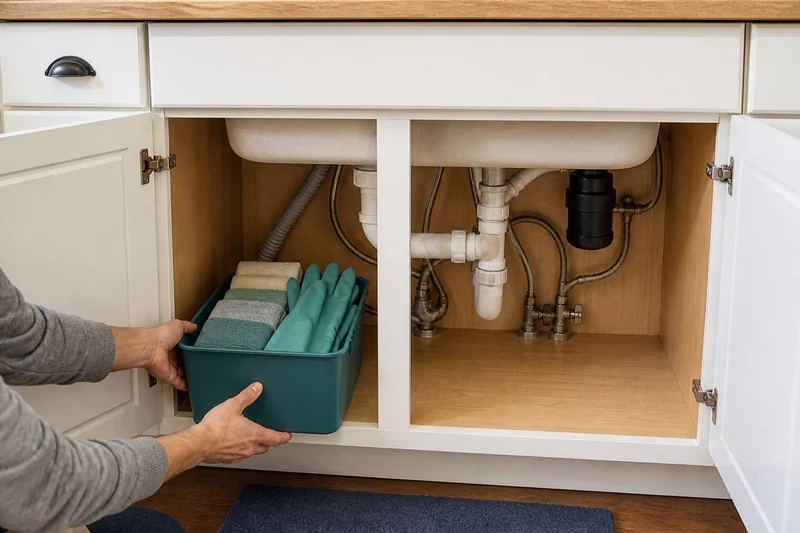
Start with access, not containers. An under-sink layout should let you see what is stored, retrieve ordinary items, and remove storage without hiding or striking the plumbing. Use existing removable bins or boxes for the first layout and buy nothing until that layout survives normal use.
Sort by use and safety
Remove everything, check the cabinet, and group the contents by job. Possible groups include dishwashing, routine surface cleaning, waste bags, and occasional maintenance supplies. Expired, damaged, leaking, or unknown containers need their appropriate disposal process—not a prettier bin.
Pause the layout when the cabinet smells damp or musty. The moisture-first under-sink check helps document visible clues before storage hides the floor again.
Follow every product label. The US EPA says potentially hazardous products should remain in their original labeled containers and incompatible leftovers should not be mixed. Its child-safety sheet says cleaning and pesticide products should be stored out of children's reach and low cabinets should use childproof locks. A home with children, pets, or other access concerns may need a different storage location entirely.
Reserve the plumbing service zone
Use the companion under-sink measurement method to map pipes, valves, hinges, and the doorway. Mark a visible zone that storage will not cover or press against. This is a cautious layout rule, not a plumbing-code measurement.
Stop and use the appropriate landlord, maintenance, or plumbing process when you see active water, recurring dampness, damage, or equipment you do not understand. Do not disconnect or move plumbing to make an organizer fit.
Build the first layout with what you own
Use removable containers already available. Keep the frequently used group in the easiest visible position and less-used groups behind it only when the front container can be lifted out without striking plumbing.
Favor a few removable groups over a permanent maze of narrow compartments. The Martha Stewart under-sink guide also begins by removing and sorting contents, then choosing containers that fit around pipes. Its product suggestions are examples, not evidence that one system works in every cabinet.
Run the access test
Before purchasing storage, record five ordinary retrieval-and-return actions:
- Can the daily-use item be seen without moving several groups?
- Can it be removed without knocking another container or pipe?
- Can it return without a precise packing sequence?
- Can the floor and rear corners still be inspected?
- Can all removable storage leave the cabinet without forcing the doorway?
Time a full clear-out only as a description of this cabinet—not as an industry standard. Record failures, awkward reaches, and containers that must be repacked perfectly.
When a product may help
A product becomes an option only after the working zones are known. Compare its exterior dimensions with the obstruction map, confirm its full insertion and removal path, and preserve the service zone. Then test the exact product with the real contents.
If leak alerts are part of the plan, add the sensor to the layout before choosing bins. It needs the placement required by its instructions, a clear path for water to reach it, and enough access for battery, alarm, and connectivity checks. The sensor-versus-automatic-shutoff comparison helps separate a cabinet-level alert from a whole-home response system.
What you still need to check
- Product labels and your household's child, pet, and safety needs determine what can be stored in a low cabinet.
- A layout that works for five retrievals may still become cluttered; check it again after normal use.
- Any organizer must fit around the real plumbing and remain removable and cleanable when loaded. This guide does not recommend a specific product.
Bottom line
Build a removable, visible layout around the plumbing, household safety needs, and any detector you must inspect. If the existing-container version cannot pass the access test, buying a more complicated organizer is unlikely to fix the underlying layout.