

Choose the installation before the appliance
A window air conditioner is a useful starting point when your window and building rules allow it. It keeps the main appliance off the floor. A portable model becomes attractive when a supported floor unit and exhaust panel are more practical for the room.
A portable air conditioner still needs to send heat outdoors. It is not a cooling box you can put anywhere with a socket. Check the window opening, a workable exhaust route and the usable floor space before comparing feature lists.
Window cooling without a floor cabinet
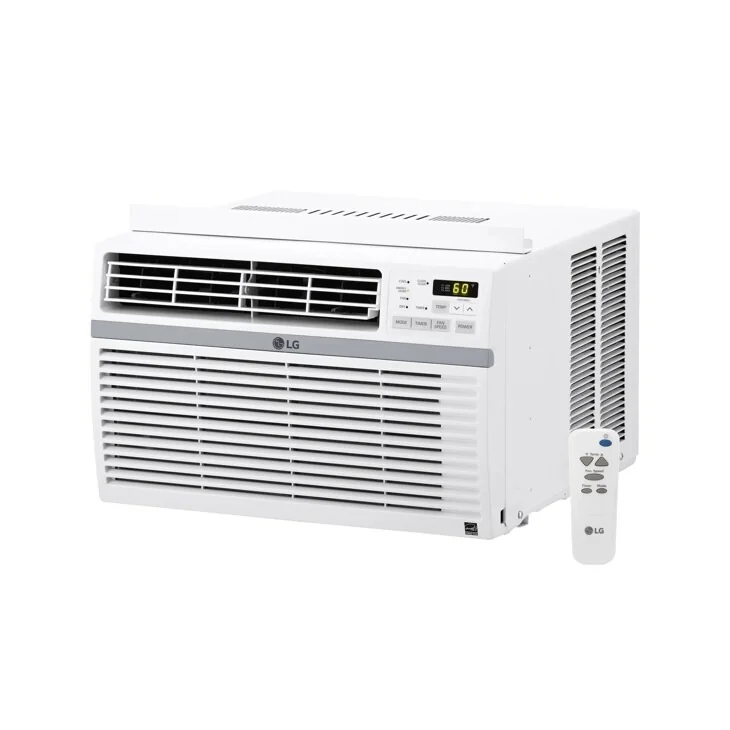
The LG LW8024RD is an 8,000 BTU window model with remote and timer control. Its US product page is the source for those features. It is a candidate for a compatible window installation when keeping the floor clear matters.
The catch: the exact opening, support method and electrical requirements must fit the building. Confirm permission before ordering if you rent. A general room-area claim is not a substitute for assessing sun exposure, ceiling height and the room you need to cool.
A dual-hose portable route
The Whynter ARC-14S is a floor-standing dual-hose example. Its current page lists a cabinet 16 inches wide, 19 inches deep and 35.5 inches tall. The hoses and their clearance need additional room.
The catch: moving the unit means arranging the exhaust setup again. Check the manual supplied with the unit for window-kit installation and drainage. Older reviews may describe an earlier specification, so match the exact version before ordering.
RTINGS' ARC-14S test, first published in June 2025, also highlights compressor noise and a bulky cabinet. For a bedroom, compare measured noise as well as installation fit.
Read the rating beside the BTU number
| Example | Published cooling rating | How to use it |
|---|---|---|
| LG LW8024RD window unit | 8,000 BTU | Size the window installation for the actual room |
| Whynter ARC-14S portable | 14,000 ASHRAE / 9,500 SACC BTU | Keep the rating standard attached when comparing portable units |
These are differently sized examples, not a controlled efficiency comparison. The larger advertised portable number does not show that it cools proportionally more effectively than the window unit. Compare like rating methods and suitable room capacity before deciding that a larger number is better value.
Price the setup that will actually work
Include required support, sealing materials and any model-specific installation parts in the window route. For the portable route, check the supplied window kit, hose arrangement, storage space and how drainage will work in your conditions. Use the manufacturer's electrical instructions; do not assume an extension cord is suitable.
If the room is cool enough but damp, start with a humidity reading instead. Our dehumidifier sizing guide helps separate moisture removal from cooling. For ownership costs, the running-cost guide explains the watts × time × electricity-rate calculation; use the AC's own data and duty cycle.
Choose a window unit when a secure, permitted installation fits. Choose portable when its complete floor-and-window setup solves a real installation constraint. Then compare exact models within the capacity and layout that your room needs.
Choosing the portable route
Compare single-hose and dual-hose portable AC setups next. Match the tested cooling rating, window panel, hose path and room clearances to the space.