
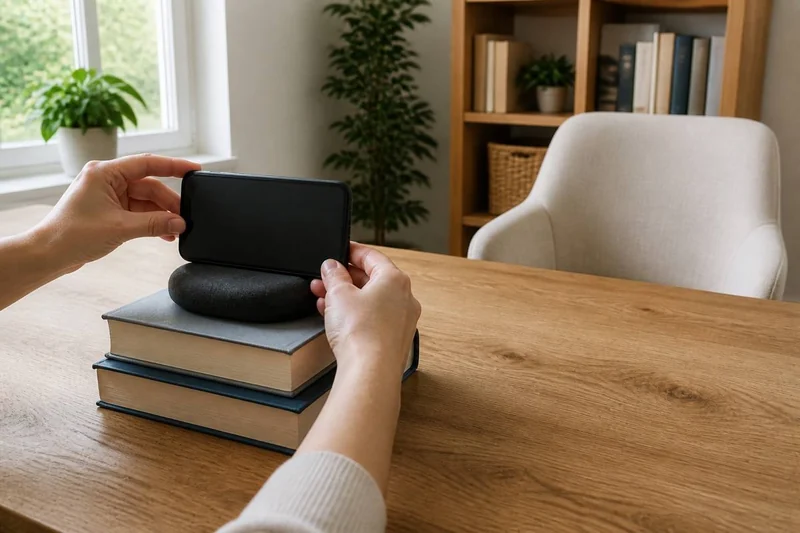
Choose one support that already fits the shot
For a desk recording, start with a low holder on a sturdy table. For a seated shot, a shelf near lens height may work. A short, broad book stack can raise the phone slightly; avoid a tall improvised tower or placement near an edge.
Lane Community College describes a tripod or stable objects at face height as options. Secure placement matters more than the number of household alternatives you try.
Let playback tell you what moved
Record ten seconds while speaking and doing the movement your real clip needs: reaching for an item, using the desk or turning a page. This is a setup check, not a reason to push or shake the phone.
| In the playback | Try next | Consider new support when |
|---|---|---|
| The picture shifts when you touch the table | Use a stable surface that is separate from the work area | The recording position and work surface cannot be separated |
| The phone slowly tilts | Reposition it in a suitable holder and check the hinge or brace | The holder cannot retain the required angle |
| Your hands or product leave the frame | Reposition the camera and repeat the real action | Furniture prevents the required height or distance |
NIU’s recording tips also recommend checking sound and lighting. A stable picture alone does not tell you that a full take is usable.
When a tripod would help
If the picture stays steady but the furniture blocks the lens position you need, compare a shelf, tripod and desk clamp for that gap. A support that changes height or reach can solve a placement problem that another stack of books will not.
Once the phone stays put, use the self-filming checklist for framing, light, sound and repeatable positions. For a moving camera, use the gimbal comparison.