
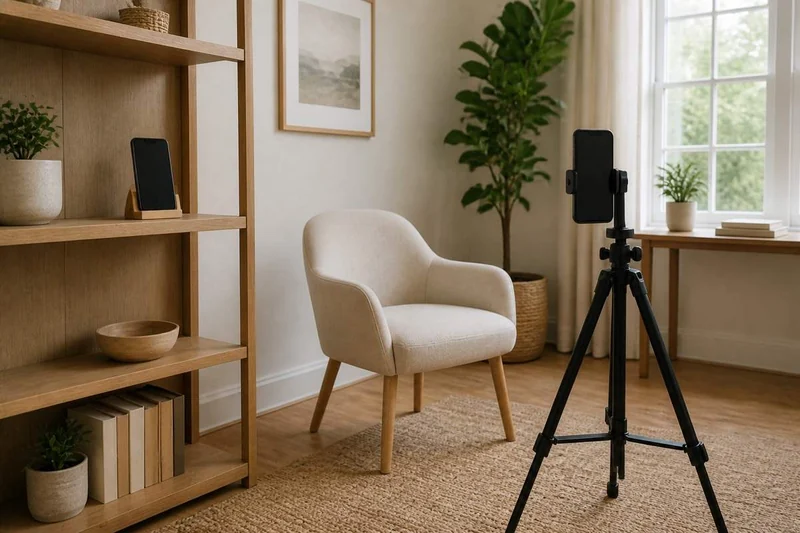
Find the position your furniture cannot give you
A shelf may hold the phone perfectly steady and still put the camera in the wrong place. If you have to sit against the wall, squeeze past the setup or rebuild it for every standing clip, the useful upgrade is freedom to place the lens.
Northern Illinois University’s recording guidance supports a tripod or stable support at eye level for a talking shot. The room-fit choices below are our practical application of that guidance.
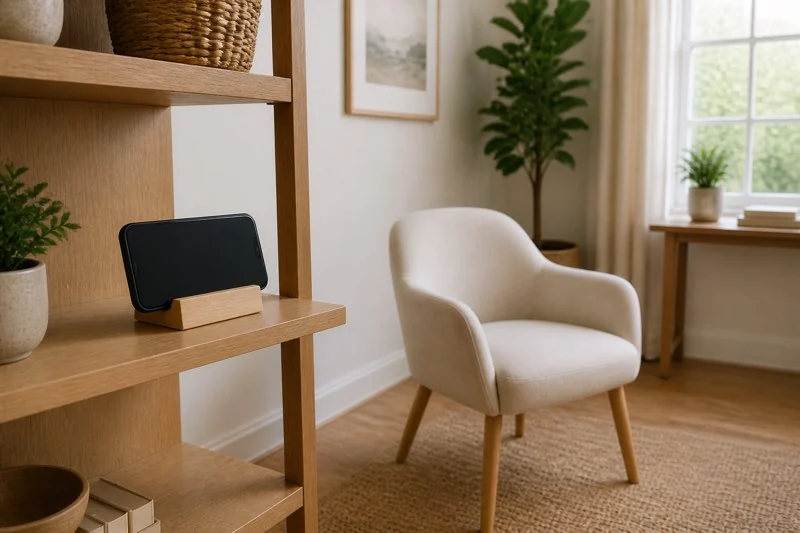
SHELF
One fixed shot?
Use a stable surface first when it already reaches the right lens height.
Advantage: no new floor footprint.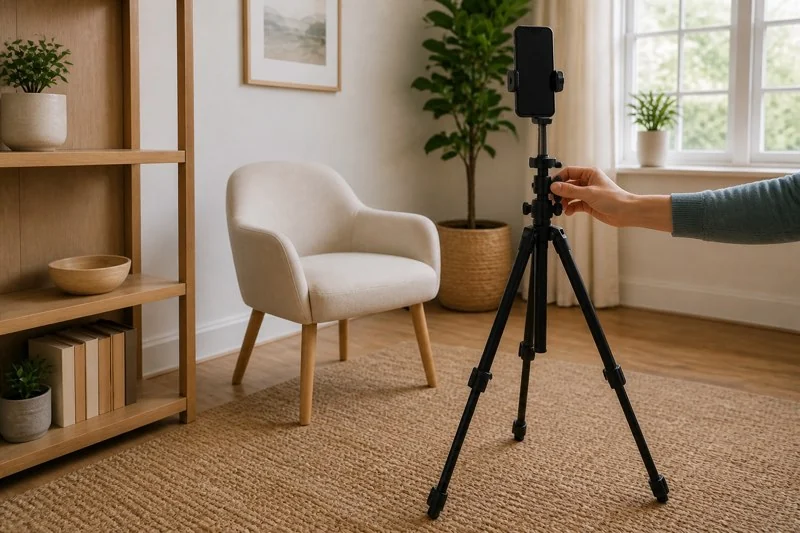
TRIPOD
Must the camera move?
A tripod earns its space when the shot changes height, angle, or location.
Tradeoff: legs, joints, and walkway space.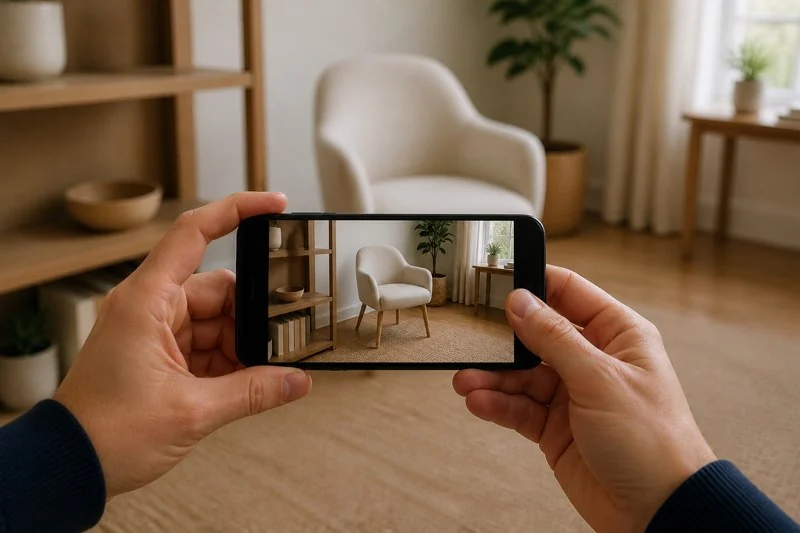
PLAYBACK
Does either setup frame well?
Record ten seconds and review eye line, stability, light, and sound.
Best next step: let the failed shot identify the missing feature.Turn a failed shot into one buying requirement
| What goes wrong in your room | Requirement to look for | Check before buying |
|---|---|---|
| The seated shot works, but a standing demonstration cuts off your head | A support that reaches both lens positions | Usable lens height with your phone mounted, rather than the stand’s headline height |
| The camera only frames correctly when tripod legs block a doorway | A compatible desk clamp or a different camera position | Desk-edge thickness, arm reach and clear space for the load |
| You cannot return to yesterday’s frame | Repeatable phone and subject positions | Mark both positions first; replace the support only if it still moves or drifts |
| You leave the frame while demonstrating | A wider fixed frame or supported subject tracking | Whether tracking works with your phone and recording app |
For example, a seated lesson and a standing product demonstration may need two lens heights. Record those heights before shopping. A stand that reaches only one still leaves half the job unsolved.
Check the mounted height, not just the box
The active lens sits at an offset from the phone mount, and rotating the phone changes the setup. Include the case, any microphone and access to controls. Use the phone-tripod height guide to compare the usable position and floor footprint.
If a shelf already produces the right fixed frame, the existing-surface setup guide helps make it repeatable. There is no need to add legs to the room simply because a tripod looks more professional.
Moving through a room is a different purchase
A manual tripod holds a composition; it does not follow you automatically. For a walkthrough or tracking demonstration, compare gimbals and tripods by the shot and app support. For a dark or noisy recording, use the short recording preflight before changing the support.