
Buy for the finish, garment, and setup
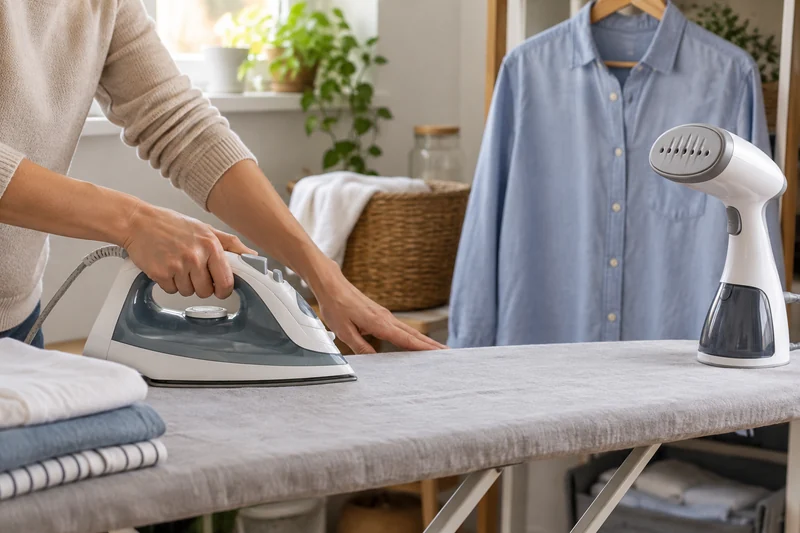
An iron presses fabric against a flat surface. A garment steamer directs steam at a hanging item with little or no soleplate pressure. That physical difference makes the choice clearer than a list of wattage, heat-up, or steam-output claims.
| Your recurring job | Better starting format | Why it fits | Main catch |
|---|---|---|---|
| Crisp shirt collars, cuffs, seams, or trouser creases | Iron and suitable board | Heat, moisture, and controlled pressure shape a flat, sharp finish | Needs a safe surface, temperature control, and more setup |
| Quick touch-up on a hanging garment | Garment steamer | Works vertically and can refresh a soft finish without an ironing board | May not create a sharp crease or flatten a stubborn seam |
| Delicate, embellished, coated, or mixed-material item | Care label and garment-specific instructions first | Fabric, lining, trim, and construction can override the tool preference | “Gentle steam” is not permission to ignore a no-steam warning |
| One small travel touch-up | Existing hotel iron or a verified travel tool | May avoid carrying another appliance | Exact voltage, plug, water, cooling, and packing requirements still apply |
Three findings that change the choice
- Pressure creates the sharper finish. The iron earns its place when the result depends on flattening, shaping, or setting a crease. A steamer is more naturally suited to relaxing wrinkles while the garment hangs.
- The label comes before the format. FTC care-label guidance explains that garment labels must warn when ironing or steam would cause harm. Check the full garment, including trim and non-detachable components.
- Convenience depends on the whole setup. A handheld steamer avoids a board but adds a water tank, hanging position, refill, cooldown, and storage. An iron may already be the simpler choice if a stable board is available and crisp results are the goal.
When the steamer fits better
A steamer fits quick hanging touch-ups, soft drape, and garments where the care instructions allow steam. Rowenta's current category guidance describes steamers as a different job from irons and gives irons the sharper collars-and-creases role. Use that distinction to match the tool to the finish you want, then compare exact models.
Check whether the steamer must remain upright, what attachments are intended for the fabric, how long it takes to cool, and whether the reservoir must be emptied before storage. Never steam a garment while someone is wearing it. Test an inconspicuous area when the care and appliance instructions permit that method.
When the iron fits better
An iron fits flat pressing, seams, collars, cuffs, hems, pleats, and other jobs where pressure is part of the result. Match the heat and steam setting to the care label rather than turning the dial to the highest material you recognize.
The FTC's US care-symbol chart distinguishes iron temperatures, do-not-iron, and no-steam instructions. An iron with a vertical-steam button may handle occasional hanging touch-ups, but that feature does not automatically replace the steadier output or ergonomics of a dedicated steamer.
What paying more needs to change
For a steamer, compare supported fabric use, stable orientation, tank access, refill and cooldown routine, cord reach, included attachments, and travel-voltage compatibility when relevant. For an iron, compare controllable temperature, soleplate shape, steam control, auto shutoff, water maintenance, cord handling, and the board or pressing surface you need.
A higher steam number is not a universal winner. Manufacturers may report steam in different modes and conditions, and a forceful stream can be the wrong tool for a care-label-restricted garment. Buy the smallest format that repeatedly produces the finish you need on the clothes you actually wear.
Decide without adding another appliance first
List five garments you routinely de-wrinkle and mark the required finish: soft, flat, crisp, or pleated. Read each care label. Then try the suitable tool you already own or the hotel's provided iron on a lower-risk garment before buying a second format.
For travel, the portable-steamer comparison separates compact domestic use from international voltage compatibility. If the wrinkles start in the suitcase, the packing-method guide helps reduce sharp folds and crushing before adding a powered tool.