
Choose the lighting job before the light
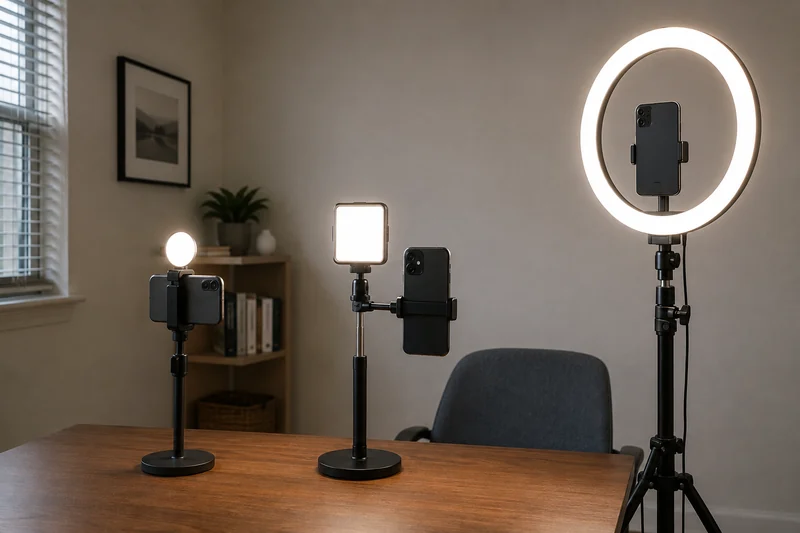
“Best phone light” compresses three different problems into one query. A clip-on can add fast close-range fill but has very little reach. A separate panel can move off-axis and create shape, but it needs a support and clear surface. A full-size ring kit can create a repeatable shooting station, but it occupies real floor and storage space.
Run the dark-video before-you-buy test before comparing products. If a window or existing diffused lamp produces a repeatable result, no new light is the right shortlist outcome.
These three options cover the main small-room setups:
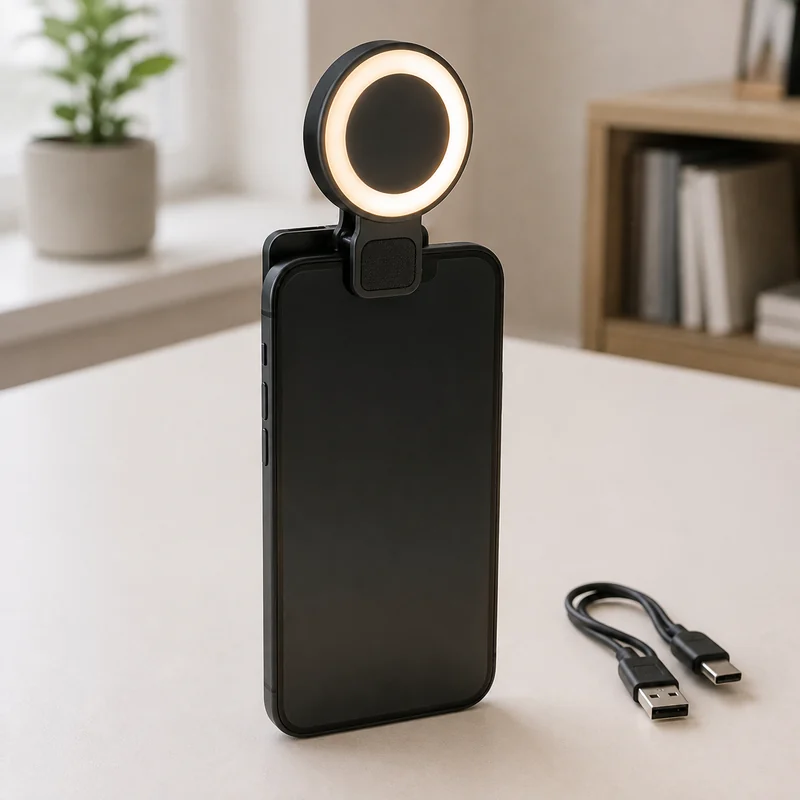
- XINBAOHONG XJ-19 clip-on selfie ring light : quick close-range front-camera fill.
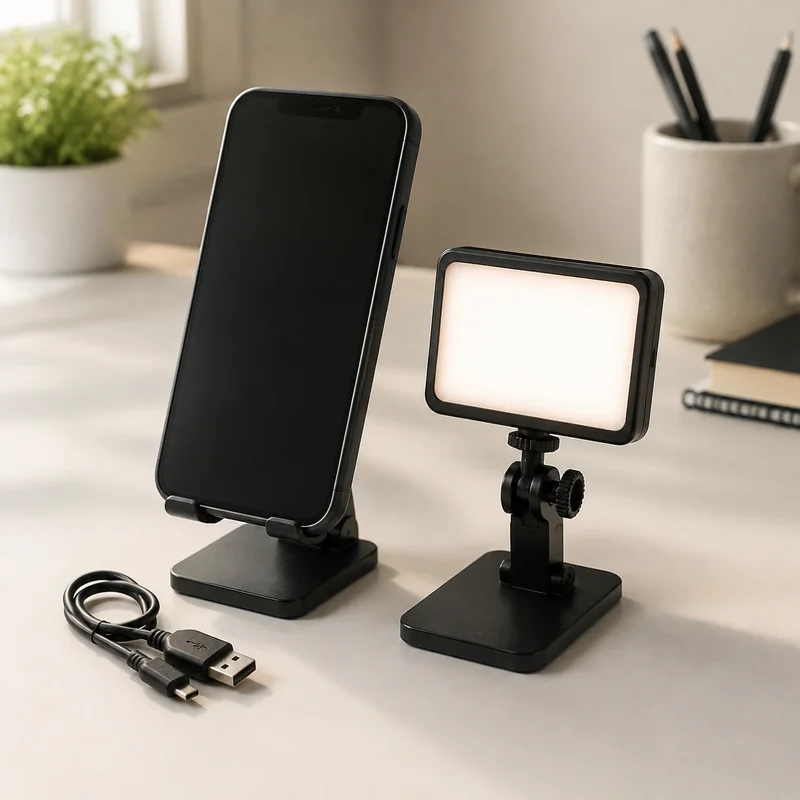
- Lume Cube Panel Mini : a separate pocket-size panel with adjustable output and color.
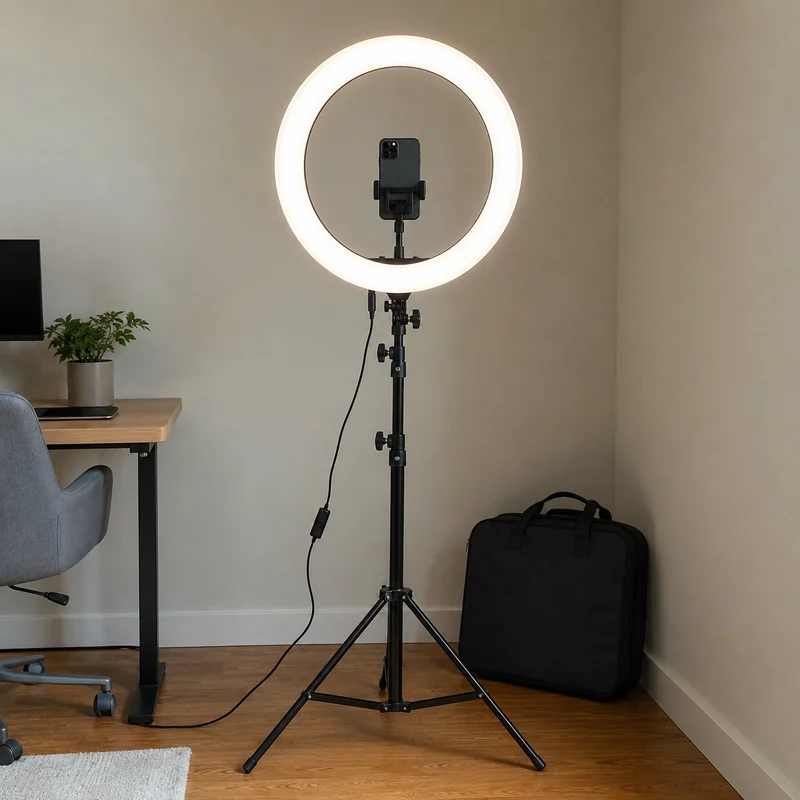
- Westcott 18-inch Bi-Color LED Ring Light Kit : a premium dedicated setup with stand, phone mount, and multiple power options.
Match the product to the room and recording habit
This is a routing table, not a first-to-third ranking.
Best for fast front-camera fill: XINBAOHONG XJ-19
The current listing identifies model `XJ-19`, ASIN `B07ZQ3X5DL`, as a rechargeable 40-LED clip-on ring with three brightness modes and a maximum listed clip thickness of 18 millimeters.
Its useful role is narrow: the phone is close, the subject faces the front camera, and the clip clears the lens, screen, case, and controls. There is no separate stand to route around a small room. That can make it the fastest setup in the comparison.
The catch is coverage and clearance. TechGearLab found the XINBAOHONG clip-on format fast to attach, but weaker in light quality and durability than its full-size leaders; its test unit could also block an iPhone rear camera. Check the clip against your case, camera, screen, and controls before choosing it.
Best for flexible placement: Lume Cube Panel Mini
Lume Cube describes the Panel Mini, ASIN `B087CBJTM5`, as a 3.6-by-2.2-inch panel producing 550 lux at half a meter. It offers 1-to-100-percent output, 3200–5600K color control, a diffuser, and a shoe mount.
This format earns the middle option because the light can move independently of the phone. Place it slightly above eye level and off to one side, or use it as fill beside a window. The subject can turn or demonstrate an object without the light being fixed to the phone body.
The catch is that the panel is only the light. It still needs a compatible support, a safe cable or charging route, and a separate phone mount. Test its usable distance, flicker, and skin-tone rendering in your actual recording app.
Best for a dedicated setup: Westcott 18-inch Bi-Color kit
Westcott identifies model `4450`, ASIN `B07YGQJR3S`, as an 18-inch diffused bi-color ring with 3200–5600K control, 0-to-100-percent dimming, AC or included battery power, a 6.5-foot stand, phone and camera mounts, and a travel case.
TechGearLab purchased and tested 14 ring lights using controlled brightness, light quality, setup time, stability, and durability work. Its panel identified the Westcott 18-inch Bi-Color as the strongest overall performer in that 2024 test, with the brightness, controls, and stability expected from a much larger format.
That does not make it the automatic small-room winner. Open the stand fully and trace the legs and cable before choosing it. Check door swing, chair travel, camera reach, full light height, and where the kit will live between shoots. A larger, brighter system can be worse than a modest panel when it must be rebuilt or stepped around every time.
What the independent test actually supports
TechGearLab reports purchasing 14 ring-light setups, taking hundreds of photos and videos, measuring brightness from the same distance, timing assembly, attaching phones and cameras, testing stability, and comparing durability. That is useful method evidence because it exposes tradeoffs that feature lists omit.
That test directly supports the Westcott result and the clip-on tradeoffs. It does not compare the Lume Cube Panel Mini against both rings, so the useful answer is still format-by-job rather than one universal winner.
Run the same room test for all three formats
Set the phone, chair, framing, background, and spoken line once. For each eligible light:
- Record the light's full loaded footprint and setup time.
- Start at a comfortable low output and move the light closer before raising it.
- Record the same ten-second line with a small head turn and hand movement.
- Inspect both eyes, shadow transition, glare, color stability, background, noise, and any visible flicker.
- Move the setup away, rebuild it, and record again.
- Log battery or cable state, phone controls blocked, stand movement, heat or comfort, and storage time.
Follow every exact mounting, charging, power, ventilation, and load instruction. Use the check to confirm your mounting position and framing; use the exact specifications for power, load and color performance.
Choose the light you can position consistently
Choose the XINBAOHONG only when speed and front-camera proximity matter more than coverage or control. Choose the Lume Cube Panel Mini when a separate positionable source and compatible support fit the room. Consider the Westcott kit only when the dedicated setup, footprint, and storage commitment are part of the plan.
If the problem is still vague, start with the one-light positioning guide and define the job before opening a product link. Once the format is clear, choose the smallest setup that gives you a repeatable, comfortable shot.