
Map the clear zones before comparing products
Mark the plumbing, valves, hinges, doorway, and full removal path. Those fixed constraints determine whether a sliding organizer, separate removable bins, a turntable, or no added organizer can remain useful.
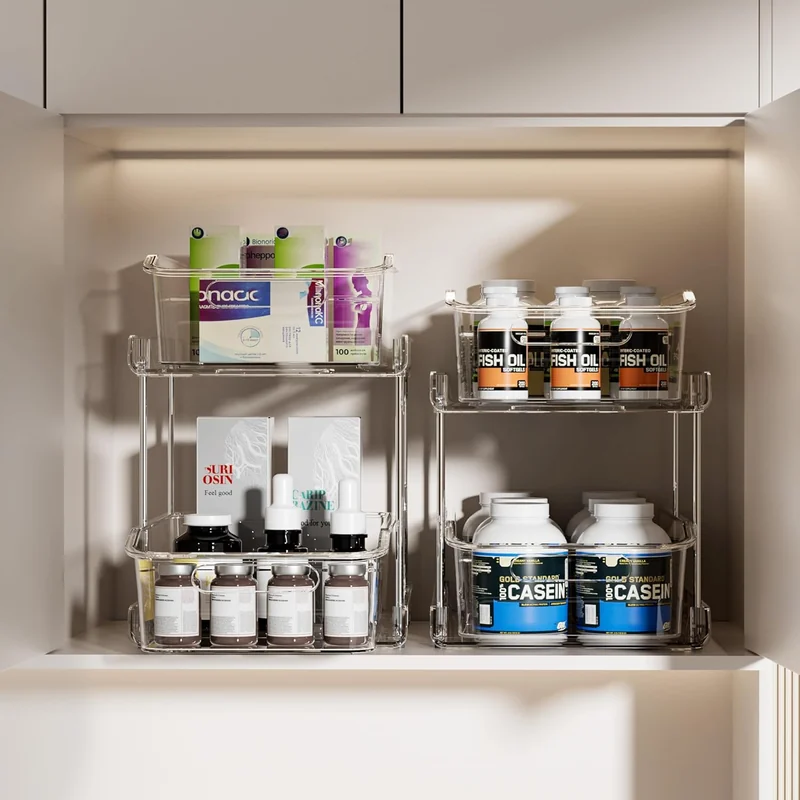
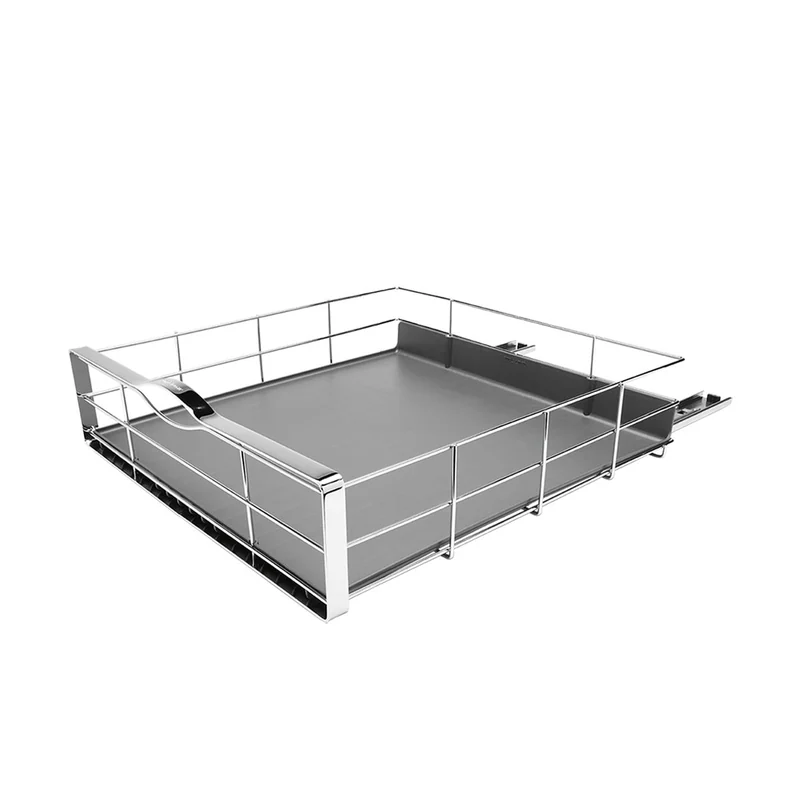
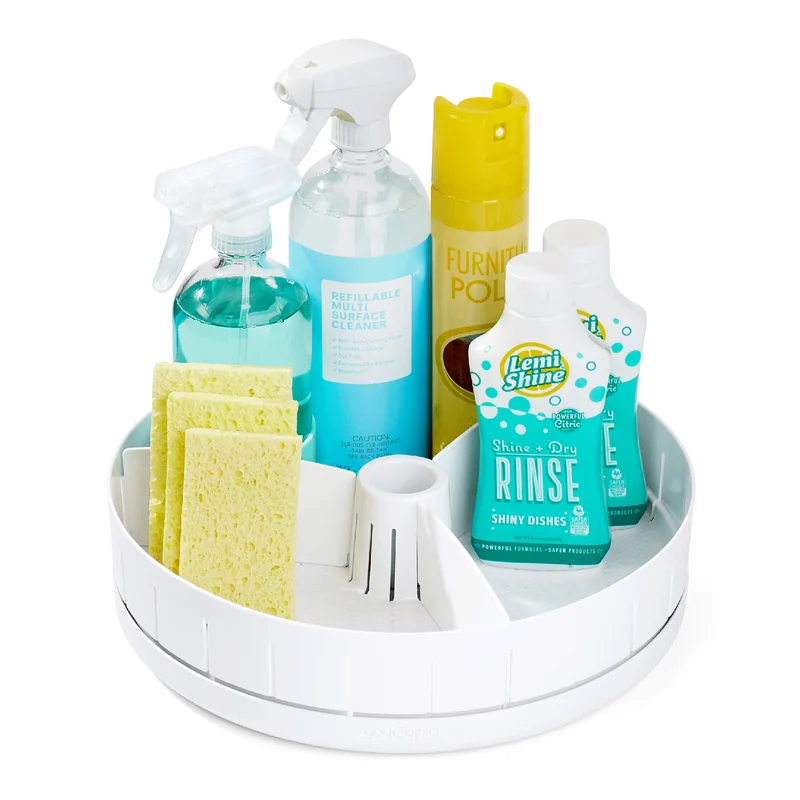
Product identity sources: DELAMU, simplehuman, and YouCopia. The photos identify exact formats; they do not prove fit, load stability, plumbing clearance, durability, or current value in your cabinet.
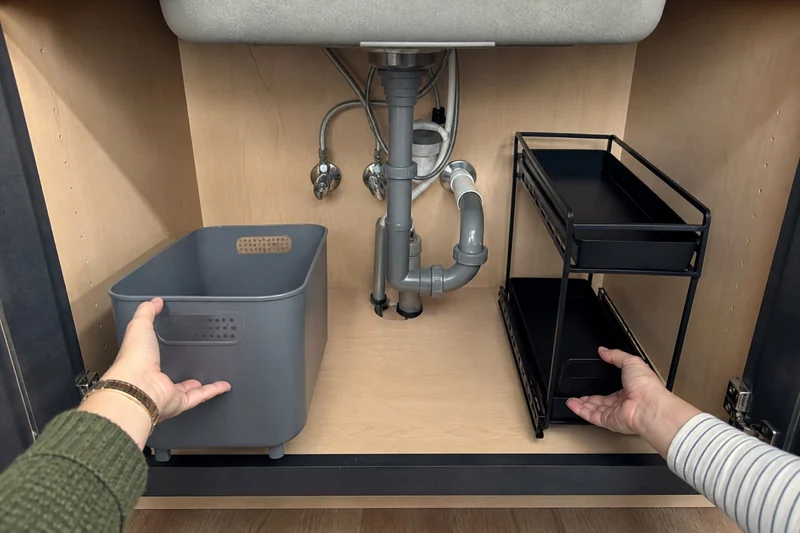
SLIDING TWO-TIER
One clear vertical option?
Use height only when the loaded slide and removal path remain clear.
Watch: pipes, valves, hinges, and door frame.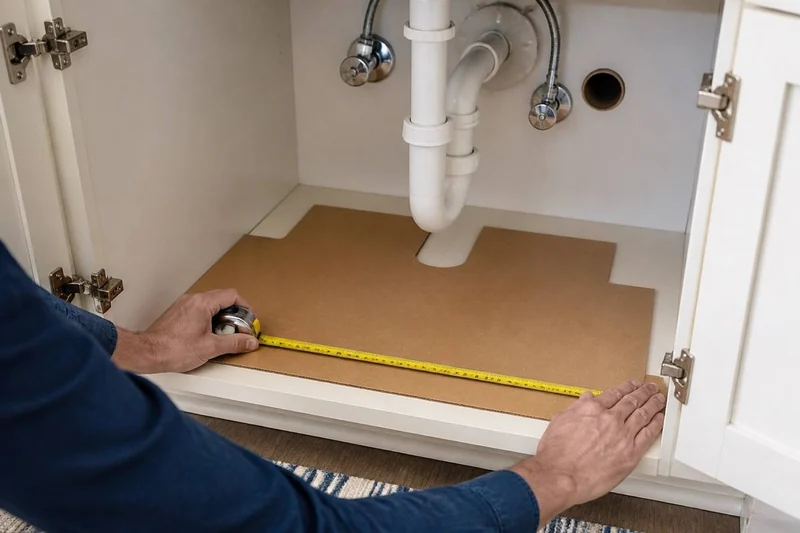
REMOVABLE ZONES
Do pipes create odd pockets?
Measure separate clear zones and use bins or caddies that can leave independently.
Reject: any layout that presses or hides plumbing.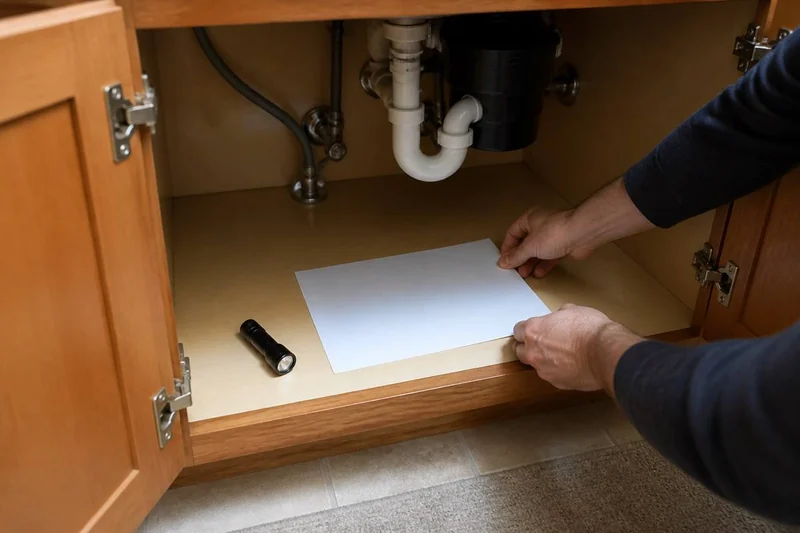
SERVICE ZONE
Is moisture or access the real problem?
Keep the floor, joints, and shutoffs visible before adding storage.
Before-you-buy result: fix moisture and access first.The exact products above make the format options concrete. Their fit, loaded access, stability, and long-term use remain open.
Pick the layout option first
The product category comes second. First make the under-sink obstruction map and reserve a visible service zone.
What current guidance actually supports
Good Housekeeping's current under-sink ideas show several formats, including sliding shelves, caddies, and door storage. That variety is more useful than a single winner because pipe placement and cabinet geometry change the job. Its organizer examples are editorial guidance, not a standardized same-cabinet product test.
Martha Stewart's under-sink guidance also starts with removing and sorting the contents, measuring around pipes, and then choosing containers suited to the space. That supports a fit-first process, not a claim that one organizer type works everywhere.
Older Good Housekeeping testing supplies limited product evidence for specific formats, including a turntable and rollout caddy. It is useful as historical method evidence, but it is too stale and too narrow to create a current winner. Current expert lists add examples; they do not replace an exact fit test.
Keep the cabinet easy to use and inspect
Many pages show attractive finished cabinets. Fewer answer the failure questions that decide whether the layout remains useful:
- Can the loaded organizer enter and leave through the real doorway?
- Can you see the cabinet floor and rear corners without dismantling the layout?
- Can a hand reach shutoff valves without moving fixed storage?
- Can the daily item leave and return without knocking plumbing?
- Can the entire cabinet clear quickly if a leak appears?
A practical fit check keeps the plumbing and daily items accessible. Choose an organizer that fits the clear space and leaves the cabinet easy to inspect.
Current research shortlist
The DELAMU two-tier 2-pack is the flexible two-zone option because the units can occupy separate clear options. The simplehuman 20-inch pull-out organizer is the premium installed option when one full-depth movement corridor remains unobstructed. The YouCopia SinkSuite turntable is the rotating specialist for a clear circular footprint.
These roles are geometry hypotheses, not measured fit or value verdicts. Exact identities were checked on August 31, 2026. Current seller, price, stock, shipping, returns, and warranty remain offer-specific.
Run the before-you-buy fit test
Use cardboard footprints or containers you already own before ordering anything.
- Mark the pipe, valve, hinge, disposal, and door-swing exclusions.
- Mark each option organizer's exterior footprint and full movement path.
- Load the temporary zone with the items it would actually hold.
- Perform five ordinary retrieval-and-return actions.
- Remove the loaded mock-up through the cabinet doorway.
- Confirm that the floor, plumbing joints, and shutoffs remain visible.
If the mock-up fails, a polished product photo will not repair the geometry.
Safety can override storage efficiency
The US EPA says potentially hazardous household products should remain in their original labeled containers and incompatible leftovers should not be mixed. Its child-safety guidance says cleaning and pesticide products should be stored out of children's reach and low cabinets should use child-resistant controls where appropriate. A home with children, pets, or other access risks may need a different storage location entirely.
Pause when the cabinet smells damp or musty. Run the moisture-first check before storage hides the evidence. Do not move plumbing to make an organizer fit.
Make the final fit check
Confirm the current offer and measure your cabinet before ordering. This comparison uses published specifications and attributed testing. Measure the installation space, allow room to pull the organizer out and choose a load you can handle comfortably. Use these research-based comparisons to choose the fit that suits your space.
Frequently asked questions
Are two-tier under-sink organizers always better?
No. They can use height efficiently, but only when the pipe layout, doorway, and full slide path stay clear. In a divided cabinet, separate removable bins may use the real space better.
Should an organizer fit tightly around the pipes?
No. Storage should not press plumbing, cover shutoffs, or make leak inspection difficult. Preserve clearance and a removable service zone.
What should I measure before buying?
Measure the doorway, usable floor zones, height at several points, pipe and valve positions, hinge intrusion, and the complete insertion and removal path—not just the cabinet's outer width.