
Let the coldest part of the day guide the choice
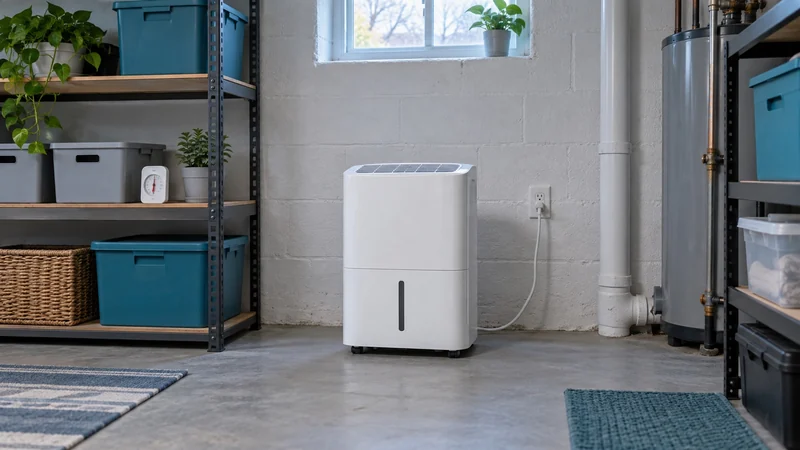
A basement that stays comfortable all winter has different needs from an unheated utility room. Check the room's temperature when it is coldest during normal use, along with humidity and floor area. Those three facts are more useful than buying the largest pint number in the search results.
ENERGY STAR's buying guidance advises choosing a model for the conditions where it will operate. Refrigerated coils can frost in cooler air, reducing water removal while a compressor unit defrosts. A low-temperature operating claim therefore needs to be read alongside the exact model's capacity information.
What the desiccant design adds
An electric desiccant machine uses an absorbent material that is regenerated with heat. It offers an alternative to the cold-coil process when the room itself is cool. This comparison concerns powered room dehumidifiers, not disposable moisture-absorber tubs.
Meaco's comparison uses room temperature as a major selection factor and explains the additional heat from desiccant operation. It also notes exceptions among compressor models. Use its explanation of the technology alongside the operating range of the exact US model you are considering.
The benefit is a machine chosen for the room you actually have. The catch is that heat and electricity use are part of the decision. Extra warmth may be welcome in a chilly utility room and less welcome in an already warm living space.
A small-room example: Ivation IVADDH06
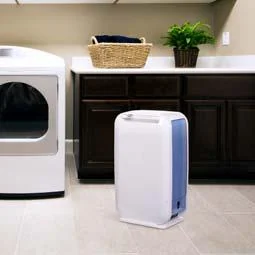
The Ivation IVADDH06 is a compact desiccant example for a smaller space. Its manufacturer specification sheet lists 120 V, 60 Hz operation, a 33–104°F operating range and high/low power consumption of 470/280 W. It also lists continuous drainage and a removable, cleanable filter.
The catch: its name says 13 pint, while that sheet specifies 12 pints per day at 68°F and 60% relative humidity. Treat this as a documented labeling difference, not evidence that it removes 12 pints in a near-freezing room. The current manufacturer page positions it for spaces up to 270 square feet, so it should not become the default for an entire large basement.
The sheet is dated 2017 and remains publicly available. Check that the supplied manual matches IVADDH06 before relying on the listed temperature range or power modes. We have not measured its cold-room extraction, noise or electricity consumption.
For a heated basement, compare the compressor lineup
If your basement remains within a compressor model's supported conditions, the basement dehumidifier shortlist offers a more relevant starting point for a larger moisture load. Choose the required capacity with the basement sizing guide, then decide how the water will leave the machine.
Keep the rating conditions attached to the capacity number. ENERGY STAR explains changes to dehumidifier testing, which is why old and new pint labels can mislead when compared without context. Keep the Ivation rating separate from compressor capacities tested under other conditions.
Make running cost part of the choice
Use the running-cost calculator with your electricity rate, power draw and expected operating hours. For example, 470 W for eight hours is 3.76 kWh before multiplying by your rate. That is an input scenario, not the Ivation's measured daily consumption: mode changes and cycling alter the result.
A drain route can matter as much as the controls when the unit runs regularly. Compare gravity drainage and a pump before buying, and follow the model's placement and hose instructions. Choose the technology for the temperature, the size for the moisture load, and the drain arrangement for the routine you want.