
Map the route before the product
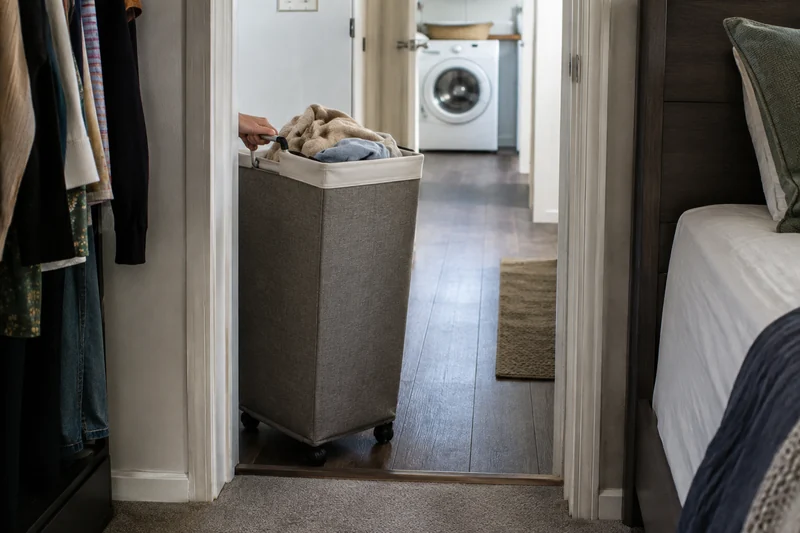
Start where dirty laundry collects and trace the complete trip to the washer. Include the narrowest doorway, the sharpest turn, thresholds, rugs, stairs, elevators, exterior pavement, and any lift into a vehicle. A hamper that rolls well for most of the trip can still be the wrong format if the hardest ten feet require an awkward lift.
Measure the narrowest opening and the parked storage footprint. Then leave room for hands, the handle, the lid, and turning clearance. Published exterior dimensions describe the product; they do not prove it will clear a real route when full.
What the sources actually establish
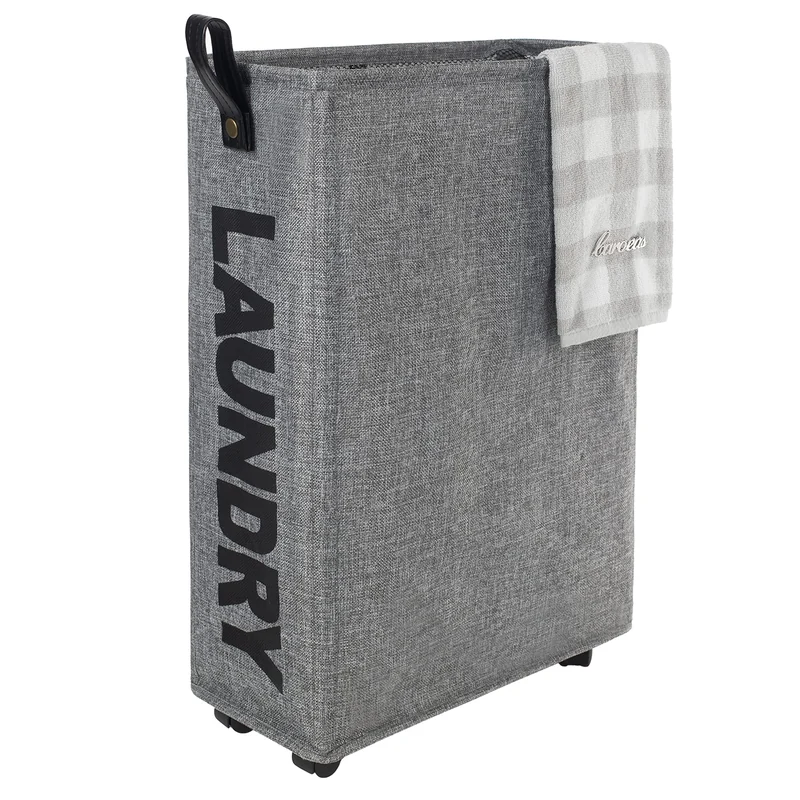
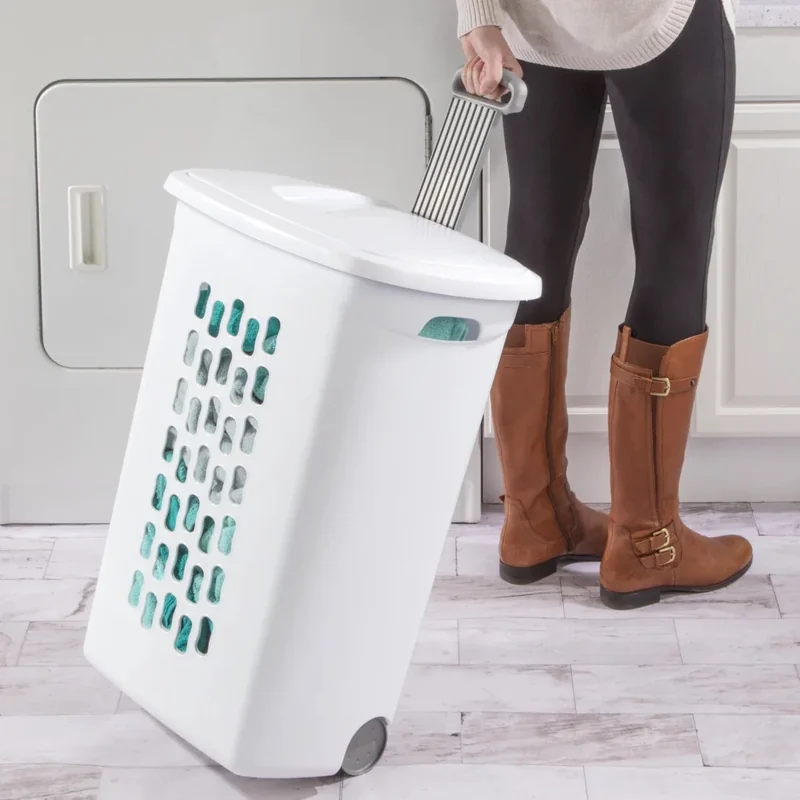
The Spruce reports home testing of the Caroeas and Sterilite formats. Its Caroeas observations support the small-space role and flag the handles when the hamper is filled. Its Sterilite observations support the same-level rolling role and explicitly caution against stairs.
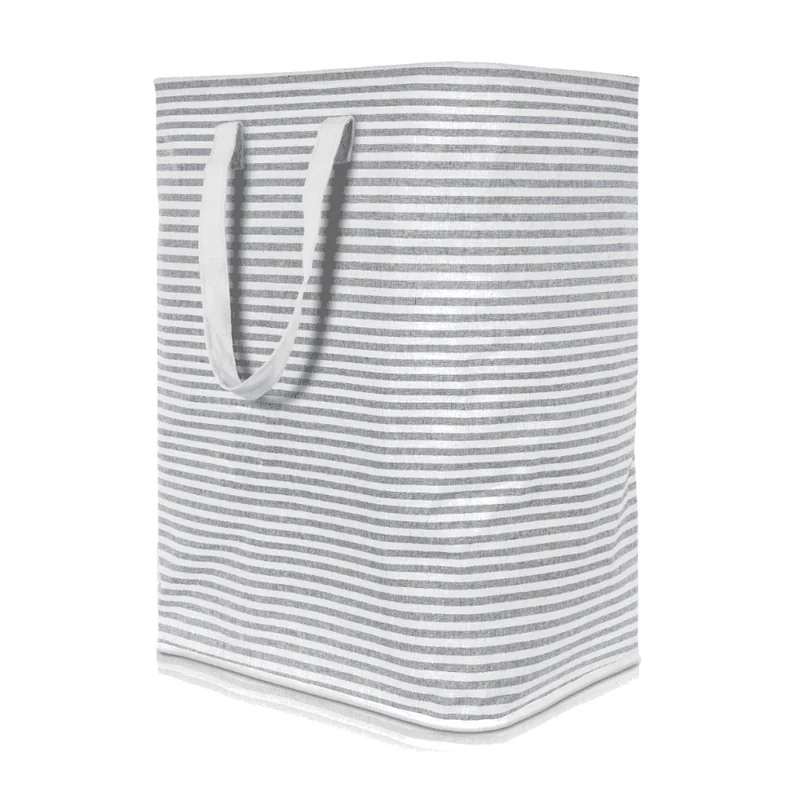
The manufacturers establish the current product identities and features. Caroeas maintains a narrow fabric rolling format with a mesh closure. Sterilite identifies model 1222, item 12228003, with a retractable handle, integrated lift handles, lid, wheels, and ventilation openings. Lifewit identifies its gray 72-liter variant as SKU LF230066GY with extended carry handles and a collapsible body.
Apartment Therapy adds editor-use evidence for the exact Lifewit Amazon record and its carry-handle role. None of these sources proves that a option fits your route, remains comfortable at your load, or outlasts the others.
Run the before-you-buy route test
- Put an empty box, tote, or current hamper where the new one would live.
- Mark the option's published exterior footprint on the floor with removable tape.
- Trace the complete route while carrying an ordinary laundry load in the container you already own.
- Record every lift, turn, threshold, rug, stair, door, elevator, and car-loading step.
- Stop at the narrowest opening and check hand clearance as well as container clearance.
- Reduce the load until the hardest lift feels controlled. That is the route's useful load—not the largest amount the hamper can hold.
This test can reject the wrong format before purchase. It cannot prove caster durability, loaded steering, handle comfort, tipping resistance, ventilation, cleaning, or long-term wear.
Wheels are a transport feature, not a capacity feature
A larger hamper can postpone laundry day while making the eventual lift harder. A narrow hamper can fit the storage gap while becoming top-heavy or awkward at a threshold. Treat capacity, storage footprint, and transport as separate decisions.
If damp items are common, plan how they will dry and how the container will be cleaned. A water-resistant coating can make cleaning easier. Dry damp textiles separately and follow the container's care instructions before enclosing them.
Choose for the route between hamper and washer
Choose wheels only when most of the route lets them work. Caroeas is the narrow rolling option, Sterilite is the rigid same-floor option, and Lifewit is the carry-first alternative for stair-heavy routes. If the before-you-buy route test exposes a difficult lift or blocked turn, solve that constraint before choosing a brand.
Use the companion guide to choose a laundry hamper for stairs, closets, or a laundromat. For nearby storage decisions, see how to organize a small closet by access and compare under-bed storage containers by clearance.